Insulation Cost Calculator (2026)

Estimate the cost to insulate. Pick area, insulation type (batt, blown, spray foam, rigid foam, radiant), R-value, and air-sealing. 2026 data; not a contractor bid.

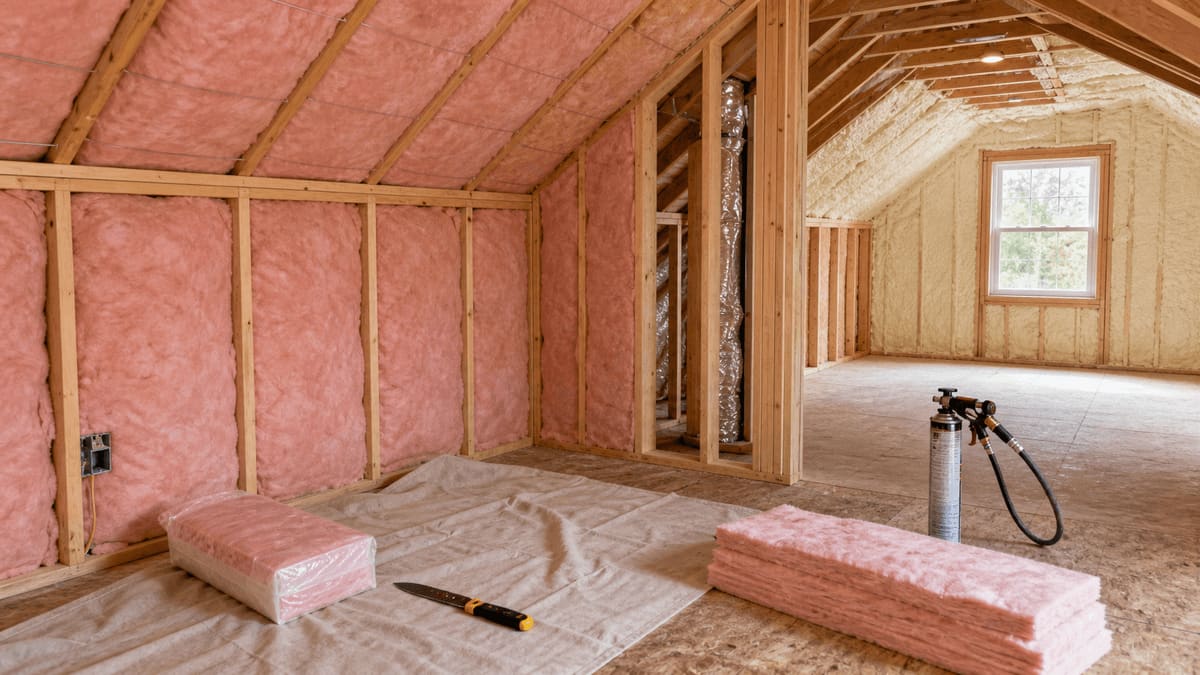
Attic mid-insulation with pink fiberglass batts installed between rafters, a vapor-barrier floor, and a two-tank spray-foam rig staged in the foreground

Enter your insulation project

Includes labor, equipment, and contractor markup.

Common projects

Area & material

Attic floor area, wall cavity sf, or rim/crawl perimeter area.
Uses the first 3 digits as a planning zone (not exact local pricing). Overrides state average when matched.

Air sealing & prep

Your insulation estimate

Estimated installed range
Calculating…
Materials
$0
Labor
$0
Per sq ft
$0

Cost breakdown

ItemQuantityEstimated range
Planning estimate, not a bid. 2026 ranges informed by Energy Star, DOE Energy Saver, IECC 2024, manufacturer (Owens Corning, Rockwool, Knauf, Icynene) MSRP, HomeGuide, Homewyse.
What's not included: Federal IRA tax credits (25C may apply — verify current cap on IRS Form 5695), state utility rebates (Mass Save, NYSERDA), asbestos vermiculite abatement (older homes with Zonolite), bath-fan and recessed-light air sealing covers, rim-joist treatment, and HERS verification.

Bid check

Got an insulation contractor quote? Compare it to the planning range.

Quote per sq ft
$0
Range check
Scope risk
Add a quote amount to compare it against the current estimate.

Methodology & sources

What this is: a planning-range insulation calculator informed by 2026 cost guides, DOE recommendations, and manufacturer pricing (Owens Corning, Knauf, Rockwool, Johns Manville, Icynene).

Material pricing is per-sq-ft for the relevant assembly (cavity, attic floor, foundation wall). 5% waste added to ordered quantity.

Labor is modeled from per-unit installed rates with a crew-rate sanity check ($50-$90/crew-hr loaded billing rate), informed by BLS OEWS 47-2131 (Insulation Workers, Floor/Ceiling/Wall).

R-value targets follow DOE recommendations by IECC climate zone and the 2024 IECC code minimums.

Last updated: May 2026. Full methodology →

How much does insulation cost in 2026?

Insulation runs $1 to $5 per square foot installed in 2026 depending on type. Blown cellulose and fiberglass are the budget options; closed-cell spray foam is the highest-performance choice.

TypeR-valueMaterial/sfInstalled/sf
Radiant barrierradiant only$0.10-$0.30$0.50-$1.50
Blown fiberglassR-2.5/in$0.40-$0.80$1.00-$2.30
Blown celluloseR-3.5/in$0.50-$1.00$1.00-$2.50
Fiberglass batt (wall)R-3.2/in$0.40-$1.20$1.20-$2.70
Fiberglass batt (attic)R-3.2/in$0.80-$2.00$1.80-$3.80
Mineral wool (Rockwool)R-4/in$1.00-$2.20$2.20-$4.20
Rigid foam boardR-5/in$0.50-$2.00$1.50-$4.00
Open-cell spray foamR-3.5/in$1.00-$1.80$1.50-$3.00
Closed-cell spray foamR-6.5/in$2.00-$3.50$3.00-$5.50

Frequently asked questions

How much does insulation cost in 2026?

$1-$5/sf installed depending on type. Attic top-ups $1,500-$4,000. Whole-house wall foam $4,000-$15,000. Federal Section 25C and 25D residential energy credits applied for property placed in service on or before December 31, 2025. Projects placed in service in 2026 generally do not qualify under current IRS guidance — verify on IRS Form 5695 and the IRS Residential Clean Energy Credit page before relying on it.

What R-value do I need?

DOE recommends attic R-30/R-49 in southern climates and R-49/R-60 in northern. Walls R-13/R-21. Floors R-19/R-30. IECC 2024 sets local code minimums by climate zone.

Spray foam vs cellulose?

Closed-cell foam is highest R/inch and air-seals — but 2-3x cellulose cost. Cellulose is cheap and dense, great for attic top-ups. Foam wins in cathedral ceilings, rim joists, crawl spaces, and conditioned attics.

Can I install insulation myself?

Batts and rigid foam are very DIY-friendly. Blown cellulose is doable with a rented blower (often free with material purchase from big-box). Spray foam should always be pro-installed (PPE + cure-time off-gassing).

Do I need a vapor barrier?

Cold climates (zone 5+) often want one on the warm side. Hot-humid (zone 1-2) avoid them — they trap moisture. Mixed climates use a smart vapor retarder (MemBrain). Consult IECC 2024 + IRC for your zone.

Why does the calculator show a price range?

Material brand, attic access, R-value target, prep work (rotted, vermiculite), and pro vs DIY swing the total 30-60%. A range gives an honest planning estimate.

Common mistakes & questions

  • Skip air-sealing first — insulating leaky walls only delays heat loss; air-seal then insulate.
  • Wrong R-value for climate zone — IECC 2024 sets minimums; check your zone (this calculator's state multiplier table includes climate zone).
  • Vapor-barrier direction wrong — warm-side in cold climates; avoid in hot-humid (zone 1-2).
  • Spray foam without HVAC redesign — tightening the envelope without rebalancing HVAC can cause moisture issues.
  • Ask your contractor: air-sealing plan, R-value target, vapor barrier strategy, HERS or blower-door test plan.

When this estimate is wrong

  • Hard access (rural, second-floor, no parking nearby) adds 10-25%.
  • Trip charge minimums — most contractors have a $200-$500 minimum, even for small jobs.
  • Local code (energy, hurricane, seismic, historic) can require upgrades beyond IRC default.
  • Disposal fees — landfill costs vary by state; tear-off jobs hit hard in CA/NY.
  • Seasonality — winter/early spring quotes are 10-20% lower than peak summer.
  • Supplier minimums — small material orders often add 10-15% over bulk pricing.
  • Permit timeline — permits add days to weeks; failed inspections add cost.