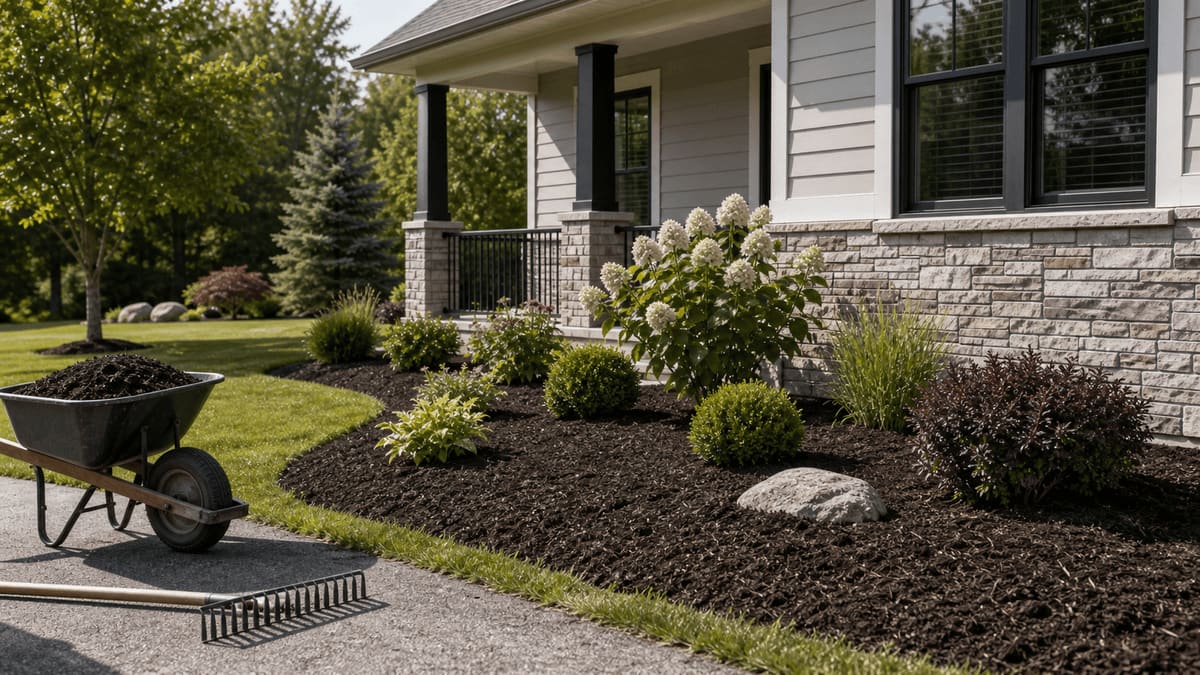
How much mulch do I need?
- Multiply length × width to get area in square feet.
- Multiply by depth in inches.
- Divide by 324 to get cubic yards.
- Add 5% to cover settling and edge spillage.
Worked example: 4 ft × 40 ft at 3″ deep is 4 × 40 × 3 = 480, divided by 324 = 1.48 cu yd. With 5% waste, order 1.6 cu yd — or 21 of the 2-cu-ft bags.
Don't pile mulch against trunks or stems. "Mulch volcanoes" trap moisture and rot the bark. Keep mulch ~3 in away from trunks. The pretty volcano shape you see at chain stores is actively bad for the tree.
Frequently asked questions
How much mulch do I need?
Multiply length x width (in feet) by your depth in inches, then divide by 324 for cubic yards. A 10x10 ft bed at 3 in deep is about 0.93 cubic yards (~12 bags). Add 5-10% for waste and uneven coverage.
How much does mulch cost in 2026?
Bulk mulch is $25-$70/cubic yard in 2026 (cheapest hardwood, premium dyed and rubber). Bagged 2-cuft bags run $3-$7 each. Delivery adds $50-$150 per load. Installed (spread by crew) typically adds $40-$80/cubic yard.
How thick should mulch be?
Standard: 2-3 in for established beds, 3-4 in for new beds and weed suppression. Avoid piling mulch against tree trunks (volcano mulching) — keep a 2-3 in gap. Refresh 1-2 in annually rather than re-installing the full depth.
What's the best mulch?
Hardwood at 3 inches is the right answer for most homes — cheap, available, decomposes into soil-improving humus. Cedar is worth the upcharge for insect problems near the house. Pine straw is the regional choice in the Southeast. Rubber is for playgrounds. Cocoa hull is a no-go if you have dogs.
When should I refresh mulch?
Most beds need a 1-2 inch top-up once a year, ideally in spring. Don't strip the old mulch unless it's matted, smells sour, or has fungal mats — just add fresh on top.
Is dyed mulch safe?
Quality dyed mulch using iron-oxide pigments on virgin hardwood is safe for plants and pets. Avoid cheap dyed mulch made from ground-up CCA-treated pallets or construction debris — look for the Mulch and Soil Council certification logo on the bag if you're unsure.