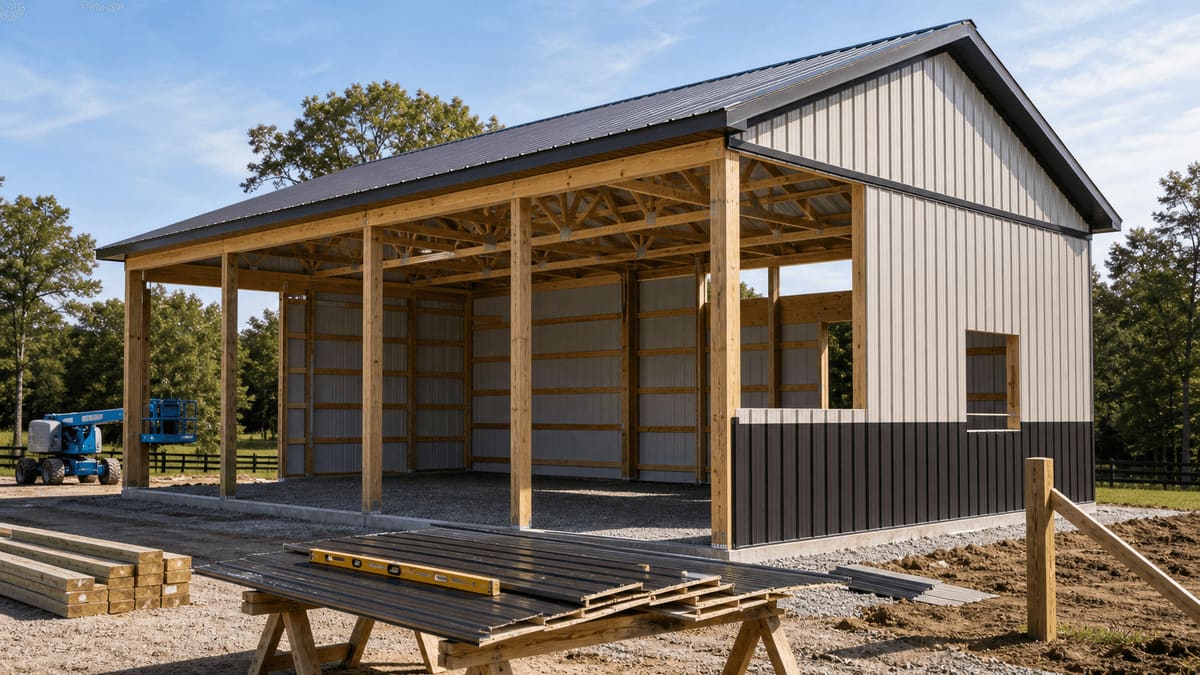
Pole barn cost by size
Post-frame buildings are priced by footprint and finish level. These are mid-grade builds with a concrete floor and basic electrical:
| Building | Footprint | Use | Finished cost |
|---|
| 24 × 30 | 720 sq ft | Small garage | $40,000 – $65,000 |
| 40 × 30 | 1,200 sq ft | Workshop | $63,000 – $102,000 |
| 60 × 40 | 2,400 sq ft | Ag / equipment | $120,000 – $190,000 |
Shell-only vs finished
The headline per-square-foot numbers you see advertised ($18–$58/sq ft) are usually shell only — posts, trusses, metal roof and siding. A building you can actually use adds the expensive parts:
- Concrete floor — $6.50–$10.50/sq ft (4 in) or $8.50–$13.50 (6 in for heavy equipment).
- Insulation — roof-only $1.40–$2.20/sq ft, or full wall + roof $3–$4.80.
- Overhead doors — $1,400–$4,800 each by size.
- Electrical — basic package $1,500–$2,500, or full sub-panel + 240V $3,500–$5,500.
Fully finished, the total often runs close to double the bare shell.
Slab thickness and how it's used
Match the build to the job. A garage or workshop wants a 4-inch slab ($6.50–$10.50/sq ft) and standard overhead doors; agricultural or equipment storage with tractors, lifts, or an RV needs a 6-inch slab ($8.50–$13.50) and taller commercial doors (a 16×14 door runs $3,200–$4,800). Post-frame construction is faster and cheaper than stick-built for large clear-span spaces, and easier to insulate and finish than a bare steel building — which is why it dominates the shop-and-garage market.
FAQ
How much does a pole barn cost in 2026?
A 24x30 small garage runs $40,000-$65,000 mid-grade with concrete and basic electrical. A 40x30 workshop $63,000-$102,000. A 60x40 ag pole barn runs $120,000-$190,000.
Pole barn vs metal building?
Pole barn (post-frame) uses wood posts in concrete with steel skin, costs less than red-iron metal building, and goes up faster. Metal buildings are stronger for clear-spans over 60 ft and commercial use.
Do I need a permit to build a pole barn?
Yes — most states require a building permit ($250-$600), and many require engineered drawings if footprint exceeds 1,000 sf or if ag-exempt status does not apply.
How much does a 40x60 pole barn cost?
A 40x60 (2,400 sq ft) post-frame building runs roughly $120,000-$190,000 finished with a concrete floor and basic electrical, similar to a 60x40 footprint. Shell-only is far less; insulation, doors, and full electrical push it up.
What is the difference between shell-only and finished pole barn pricing?
Shell-only ($18-$58 per sq ft) is the structure - posts, trusses, metal roof and siding. Finished adds the concrete floor, insulation, overhead doors, and electrical, which together often roughly double the bare-shell cost.
How thick should a pole barn concrete slab be?
4 inches ($6.50-$10.50 per sq ft) is standard for a garage or workshop. Step up to 6 inches ($8.50-$13.50) for heavy equipment, vehicle lifts, or tractors that would crack a thinner slab.
More questions
Do I need a permit, and what about zoning?
Almost always a building permit, and zoning is the first hurdle that trips people up. Beyond the permit, your parcel's setbacks dictate how close to the property line the barn can sit, and some areas cap the height or footprint of an accessory building or require it to match an agricultural use. Check zoning and setbacks before you finalize the size or location — it can force the footprint smaller than you planned.
Do I need engineered drawings?
Usually yes for anything but the smallest structures. The plans have to show the post-frame will carry your local design loads — wind speed for your region and the ground snow load on the roof, which in northern areas is the number that sizes the trusses and post spacing. Many jurisdictions require an engineer's stamp on the drawings before they issue the permit; a stock kit plan may still need site-specific sealing.
How deep do the posts go?
The posts (or their concrete footings/brackets) have to bear below the local frost line so winter heave doesn't lift the building — that depth ranges from a foot or so in the South to 4 ft or more in cold climates. Traditional post-frame sets the columns in augered holes on concrete footings; modern versions use engineered wet-set brackets that keep the wood above grade. The frost depth and soil bearing drive this, not a fixed number.
Slab or gravel floor?
Depends on the use. A compacted gravel floor is far cheaper and fine for equipment storage or a run-in. A poured concrete slab is needed if you'll park heavy vehicles, run a shop, or want a clean finished floor — and the slab has to be thick enough for the point loads it will carry (a tractor or hoist is very different from a lawnmower). Decide the floor early, because a slab poured after the posts are set is a different job than one integrated from the start.
Do I need to worry about condensation?
Yes — it is the classic pole-barn complaint. Bare steel roofing sweats when warm interior air hits the cold underside, dripping onto whatever is stored below. Control it with a vapor barrier, a condensation-control membrane laminated to the panels, or insulation, plus ridge and eave ventilation. Building without addressing it is why so many older barns rust from the inside and rain on their contents.
What about electricity and water?
Those are separate line items, not part of the shell. Running a new electrical service or subpanel to a detached barn means a trench, a feeder, and usually its own permit and inspection; the distance from the house panel drives the cost. Plumbing, a concrete apron, or an overhead-door opener are likewise add-ons. Price the powered, finished barn, not just the frame and metal.