Radon mitigation cost by foundation type
Your foundation determines the system, which sets the price. All figures are installed, including the fan, electrical, and a post-mitigation test:
| System | Foundation | Installed cost |
|---|
| Sub-slab depressurization (SSD) | Basement | $2,300 – $4,000 |
| SSD | Slab-on-grade | $2,600 – $4,400 |
| Sub-membrane | Crawl space | $2,900 – $5,000 |
| Block-wall depressurization | Block foundation | $3,200 – $5,600 |
How sub-slab depressurization works
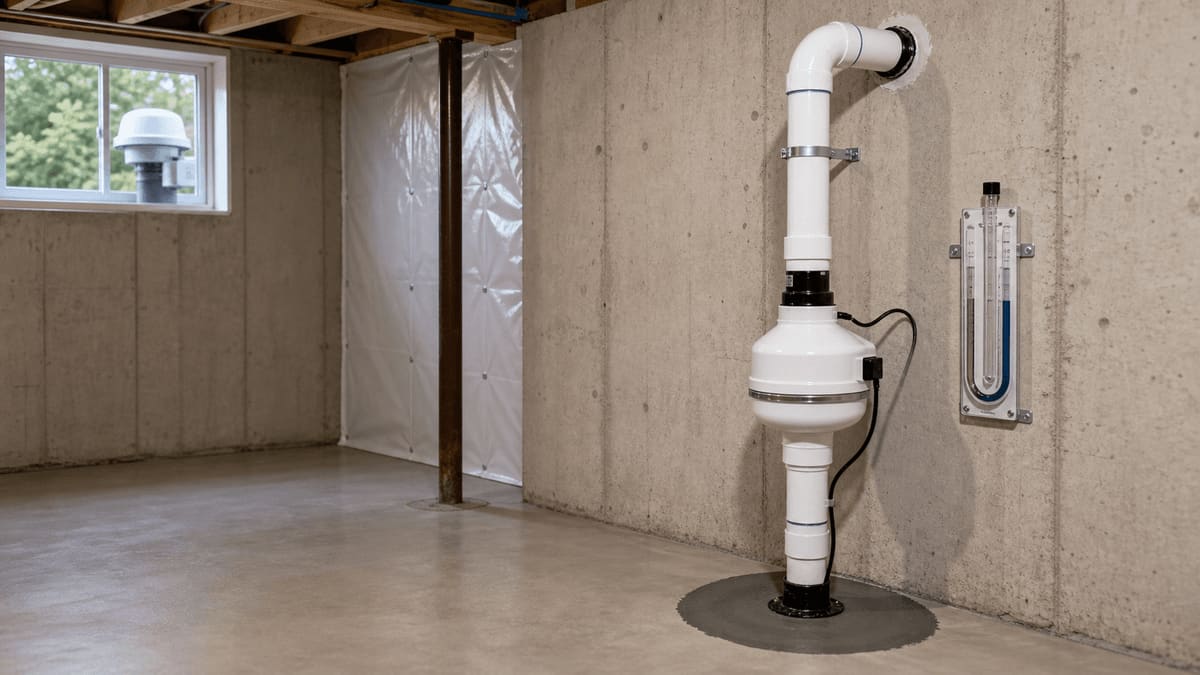
The standard fix is simpler than it sounds: a pipe is sealed through the slab and a continuous fan ($220–$470 depending on the flow needed) creates gentle suction in the gravel under your foundation. That pulls radon gas out from beneath the slab and vents it above the roofline, where it disperses harmlessly before it can enter the living space. Large or segmented slabs may need additional suction points ($280–$450 each). Routing the pipe through an interior closet ($350–$600) hides it for curb appeal; an exterior run is cheaper but visible.
Always verify with a post-test
A radon system isn't finished until it's proven to work. Retest after installation ($100–$200) to confirm levels dropped below the EPA action level of 4 pCi/L — a well-designed system typically brings most homes well under that. Use an installer certified by the NRPP or NRSB; radon is a recognized lung-cancer risk, so this isn't a job for guesswork. One ongoing note: the fan is the only moving part and lasts roughly 5–10 years; replacing it ($220–$470) is the system's main long-term maintenance.
FAQ
How much does radon mitigation cost in 2026?
A standard sub-slab depressurization (SSD) for a basement runs $2,300-$4,000 installed including fan, electrical, and post-test. Slab-on-grade $2,600-$4,400. Crawl space sub-membrane $2,900-$5,000. Block-wall systems $3,200-$5,600.
Do I need a permit for radon mitigation?
Permit requirements vary by jurisdiction ($75-$200 where one is required), and some states require the contractor hold an NRPP / NRSB credential or a state licence. Always test before and after.
Will the mitigation work?
A properly designed SSD reduces radon by 50-99% in most homes. Post-test should show under 4 pCi/L (EPA action level). If not, additional suction points or a higher-flow fan may be needed.
How does a radon mitigation system work?
Most systems use sub-slab depressurization: a pipe and a continuous fan create suction under the foundation slab and vent radon gas above the roofline before it enters the home. The fan runs continuously and is the only moving part.
What is a safe radon level after mitigation?
Below the EPA action level of 4 pCi/L, and a well-designed system usually brings homes well under it. Always confirm with a post-mitigation test ($100-$200) - a system that is installed but not verified is not finished.
How long does a radon fan last?
Radon fans run continuously and typically last about 5-10 years. Replacement is $220-$470 depending on the model and is the system\u2019s main long-term maintenance item; the piping itself lasts for decades.
More questions
Do I have to retest after the system goes in?
Yes — a post-mitigation radon test is the only proof the system worked, and a reputable installer includes it. It is typically run a day or two after the fan is energized, often as a 48-hour or continuous-monitor test. Without the follow-up test you have a fan running but no confirmation the level actually dropped.
How does the system actually lower radon?
The standard method is active sub-slab depressurization: a pipe is sealed into the soil beneath the concrete slab and an inline fan draws the radon-laden air from under the foundation and vents it above the roofline before it can enter the living space. On a crawl space, the equivalent is sealing a heavy membrane over the soil and drawing suction beneath it. Sealing slab cracks and capping the sump help the fan pull an even vacuum.
Is this a DIY project?
Not advisable. An incorrectly designed system — wrong suction point, undersized fan, or a vent that terminates too low or near a window — can fail to reduce radon or even redistribute it, and many states license radon contractors specifically because of that risk. Because radon is a health issue measured in picocuries you can't see or smell, this is one to leave to a certified mitigator who verifies the result with a test.
How long does the fan last, and how do I know it's working?
Radon fans generally run continuously and last around 5–10 years before needing replacement. The system includes a simple U-tube manometer on the vent pipe: as long as the liquid columns sit at different heights, the fan is pulling suction. If they level out, the fan has failed and radon can climb again — glance at it periodically, and retest every couple of years or after major foundation work.
What level is the system supposed to reach?
The EPA action level is 4.0 pCi/L, and mitigation is expected to bring the home below that — good systems routinely land at or under 2.0 pCi/L, with the EPA noting no level is risk-free. Ask the installer what guaranteed post-mitigation number they put in writing; a solid contractor will commit to a target and retest to prove it.
Can radon go up after I seal or finish a space?
Yes. Sealing a crawl space or basement, or changes that affect how the house pulls air (new HVAC, tighter envelope), can shift pressures and raise indoor radon. That is exactly why testing is a repeat activity, not one-and-done — retest after any project that seals the foundation or alters airflow, even if you already have a mitigation system.