Solar Panel Cost Calculator (2026)

Estimate the cost of a residential solar PV system. Pick system size in kW, panel tier, inverter, and optional battery storage. 2026 data; not a contractor bid.

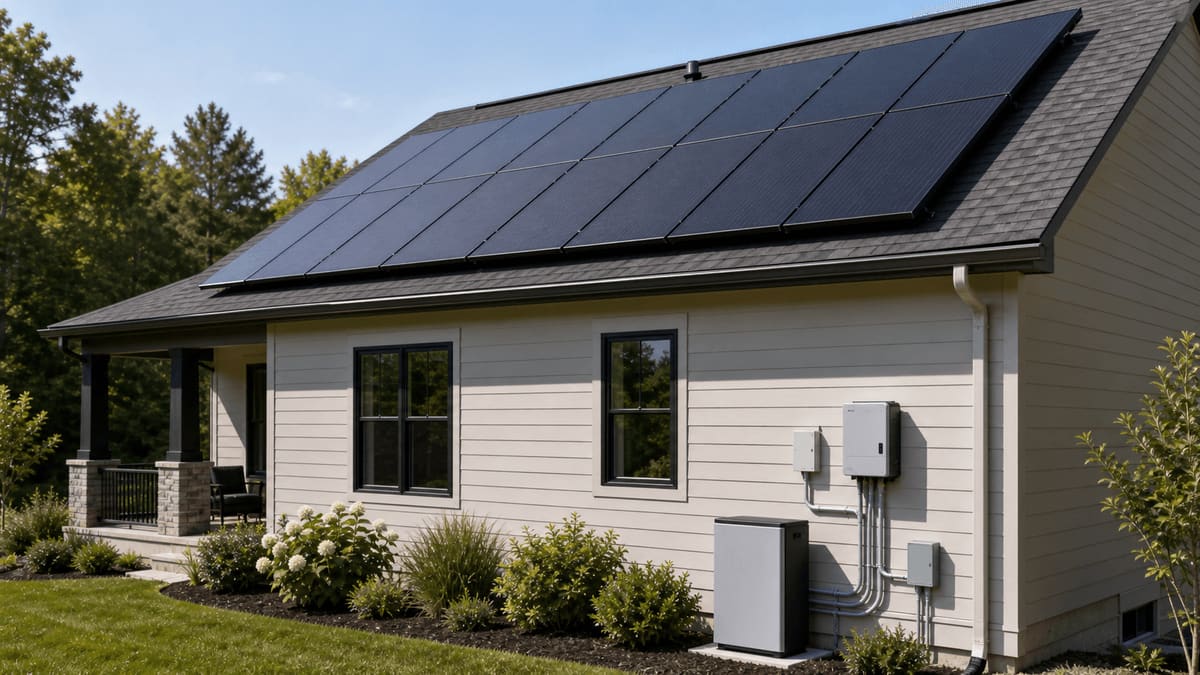
Residential solar PV array installed on an asphalt-shingle roof with microinverters under each panel, plus a wall-mounted inverter and battery in the garage

Enter your solar project

Includes equipment, install labor, permits, and contractor markup. Federal Section 25C and 25D residential energy credits applied for property placed in service on or before December 31, 2025. Projects placed in service in 2026 generally do not qualify under current IRS guidance — verify on IRS Form 5695 and the IRS Residential Clean Energy Credit page before relying on it.

Common projects

System size

Avg US home 7-9 kW. Sun-rich zones (AZ/CA/TX) need less; cloudy (WA/NY) need more.
Uses the first 3 digits as a planning zone (not exact local pricing). Overrides state average when matched.
Microinverters cost more but maximize per-panel production with shading.
0 = grid-tie only. 13 kWh ~ 1 Tesla Powerwall. Off-grid typically 20+ kWh.

Site & permit

Your solar estimate

Estimated installed range
Calculating…
Equipment
$0
Labor
$0
Per kW
$0

Cost breakdown

ItemQuantityEstimated range
Planning estimate, not a bid. 2026 ranges informed by DOE SETO, EnergySage, SolarReviews, and manufacturer (REC, SunPower, Enphase, SolarEdge, Tesla) MSRP. Use the "Copy summary" button to see the estimated total (no credit subtracted; verify eligibility on IRS Form 5695).
What's not included: SREC income (PJM states), state-specific rebates (NY-Sun, Mass SMART, TECH Clean CA), net metering valuation, time-of-use rate impact, EV charger install, ground-mount or pole-mount systems, generator interlock, tree trimming.

Bid check

Got a solar installer quote? Compare it to the planning range.

Quote per W
$0
Range check
Scope risk
Add a quote amount to compare it against the current estimate.

Methodology & sources

What this is: a planning-range residential solar calculator informed by 2026 cost data from DOE SETO, EnergySage, SolarReviews, and manufacturer MSRP (REC, SunPower, Enphase, SolarEdge, Tesla, LG).

Equipment is per-watt for panels/inverters/racking/BOS. Battery storage per Wh. Installed average $/W in 2026 ranges $2.50-$4.50 across the US.

Labor is modeled from per-unit installed rates with a crew-rate sanity check ($75-$140/crew-hr loaded billing rate), informed by BLS OEWS 47-2231 (Solar PV Installers).

Federal Section 25D credit: rate and expiration changed under recent legislation. Verify current eligibility on IRS Residential Clean Energy Credit page before relying on it.

Last updated: May 2026. Full methodology →

How much does residential solar cost in 2026?

Residential solar runs $2.50 to $4.50 per watt installed in 2026 before the federal tax credit. If a federal Section 25D credit applies, net cost is reduced; verify current rate on IRS Form 5695.

System sizeGross installedProduction (avg)
5 kW$12,500-$22,500~6,000-8,000 kWh/yr
8 kW (avg US home)$20,000-$36,000~9,600-12,800 kWh/yr
10 kW$25,000-$45,000~12,000-16,000 kWh/yr
15 kW (EV / electric heat)$37,500-$67,500~18,000-24,000 kWh/yr
10 kW + 13 kWh battery$33,500-$57,000backup-ready

Frequently asked questions

How much do solar panels cost in 2026?

$2.50-$4.50/W installed; 8 kW system runs $20,000-$36,000 gross. Federal Section 25C and 25D residential energy credits applied for property placed in service on or before December 31, 2025. Projects placed in service in 2026 generally do not qualify under current IRS guidance — verify on IRS Form 5695 and the IRS Residential Clean Energy Credit page before relying on it.

What's the federal solar tax credit?

Federal Section 25C and 25D residential energy credits applied for property placed in service on or before December 31, 2025. Projects placed in service in 2026 generally do not qualify under current IRS guidance — verify on IRS Form 5695 and the IRS Residential Clean Energy Credit page before relying on it. Always check IRS Form 5695 for the current rate before relying on it.

What size system do I need?

Annual kWh usage / 1,200-1,500 (depending on sun-hours). Avg US home ~10,800 kWh/yr → 7-9 kW. AZ/CA/TX need less per kWh; WA/NY need more.

Is battery storage worth it?

Battery is the right call if (a) you have time-of-use rates (CA NEM 3.0), (b) you want backup power, or (c) net metering pays poorly. Battery is ~30-50% of the system cost; the Federal Section 25C and 25D residential energy credits applied for property placed in service on or before December 31, 2025. Projects placed in service in 2026 generally do not qualify under current IRS guidance — verify on IRS Form 5695 and the IRS Residential Clean Energy Credit page before relying on it.

How long do solar panels last?

Panels are warrantied 25-30 years (typically retain 80-87% production at year 25). Inverters: string 10-15 yr, microinverters 25 yr. Batteries 10-15 yr.

Can I install solar myself?

Off-grid systems on cabins, RVs, sheds — yes. Grid-tie systems require licensed electrician + utility approval + permitting; DIY voids most warranties, rebates, and tax credits.

Why does the calculator show a price range?

Brand tier, roof complexity (multi-plane, steep), electrical service condition, battery, and regional installer competition swing the total 30-60%.

Common mistakes & questions

  • Oversizing for net metering — utilities cap how much you can install; check NEM rules first.
  • Skip the roof inspection — never put panels on a roof with less than 10 yr of life left.
  • Wrong inverter for shading — string inverters underperform on shaded roofs; microinverters or DC optimizers are required.
  • Underestimate the panel-upgrade trigger — adding solar+battery often forces 200A service.
  • Skip the production estimate — get a real PVWatts production number, not just kW capacity.
  • Lease vs buy — leases pass the Federal Section 25C and 25D residential energy credits applied for property placed in service on or before December 31, 2025. Projects placed in service in 2026 generally do not qualify under current IRS guidance — verify on IRS Form 5695 and the IRS Residential Clean Energy Credit page before relying on it. Verify current credit eligibility on IRS Form 5695.
  • Ask your installer: production guarantee, monitoring access, panel + inverter warranties, NABCEP certification, escalator-clause language.

When this estimate is wrong

  • Roof complexity (multi-plane, steep, tile) adds 10-25%.
  • Trip charge minimums on small systems (<5 kW) push $/W higher.
  • Local code (CA, MA, NY) requires rapid-shutdown and more permits than IRC default.
  • HOA review can add weeks to schedule.
  • Seasonality — winter/early spring quotes are 5-15% lower than peak summer.
  • Supplier minimums on small orders.
  • Permit + utility interconnect timeline — 6-12 weeks typical.