Crawl space encapsulation cost by size
Encapsulation is priced largely by floor area and how complete the system is — a barrier-only job versus a full system with a dehumidifier and sump:
| Crawl size | Basic (barrier + lay) | Full system |
|---|
| Smaller crawl | $4,500 – $7,500 | $9,100 – $15,100 |
| ~900 sq ft (typical) | $6,500 – $11,000 | $12,000 – $20,000 |
| Large / premium | $10,000 – $16,500 | $27,000 – $45,700 |
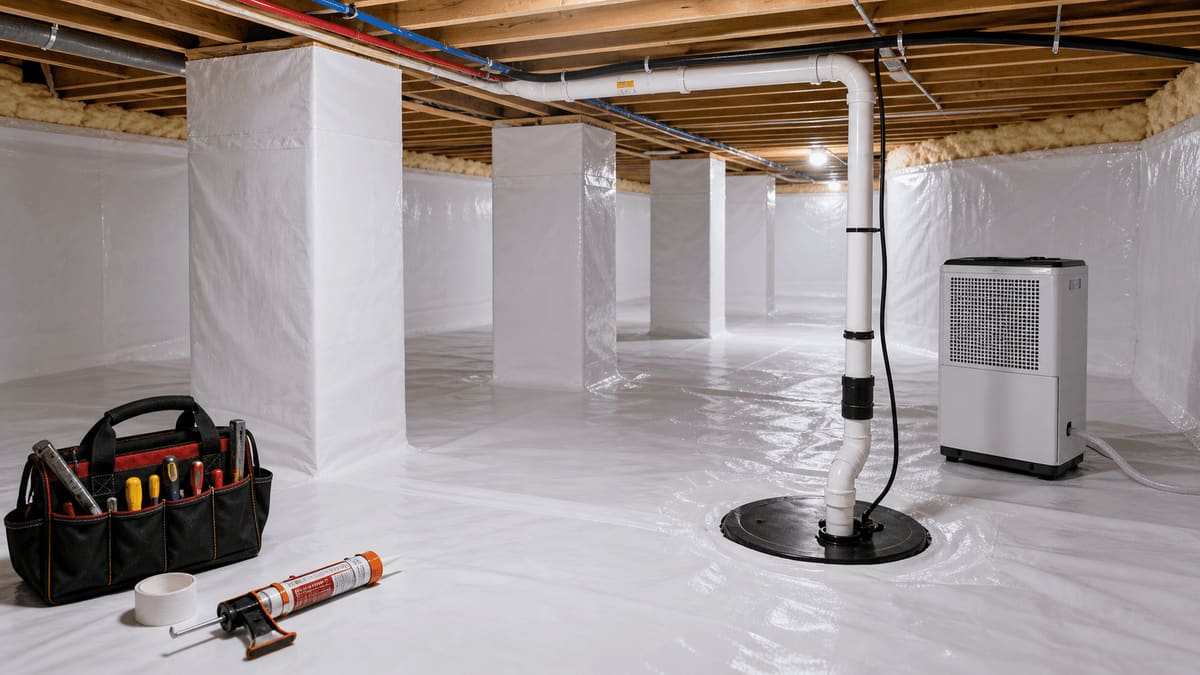
A typical 900 sq ft crawl runs $12,000–$20,000 fully encapsulated (12-mil barrier, sump, commercial dehumidifier, 2-inch wall foam); problem crawl spaces needing heavy moisture treatment, a battery sump, and a 20-mil barrier run $27,000–$45,700.
What's in a full encapsulation
"Encapsulation" ranges from a cheap liner to a complete moisture system — know what's in the quote:
- Vapor barrier across the floor (and up the walls), seams overlapped and sealed.
- Sealed perimeter and rim-joist insulation ($2.5–$4/sq ft).
- A dehumidifier — portable ($600–$950) or commercial inline ($1,500–$2,400) — the part that actually controls humidity long-term.
- A sump ($1,100–$2,700) if water intrudes.
A "barrier only" bid that skips the dehumidifier and perimeter sealing isn't a true encapsulation.
Barrier thickness and dehumidifier: what matters
Thickness: 6-mil ($0.65–$1.10/sq ft) is the minimum and punctures easily; 12-mil ($1.10–$1.85) is the durable standard; 20-mil ($1.85–$3.00) is worth it if you'll store items or crawl through regularly. The dehumidifier is the load-bearing part: a barrier slows ground moisture, but only a dehumidifier actively dries the space and keeps relative humidity below the level where mold and wood rot start. Pairing the two is what makes encapsulation a permanent fix rather than a temporary one.
FAQ
How much does crawl-space encapsulation cost in 2026?
A typical 900 sf crawl runs $12,000-$20,000 fully encapsulated with 12-mil barrier, sump, commercial dehumidifier, and 2-in wall foam. A smaller 600 sf house runs $9,100-$15,100; a problem crawl space needing heavy moisture work, a battery sump, and a 20-mil barrier runs $27,000-$45,700.
Is encapsulation worth it?
In humid / mixed climates yes — it eliminates mold growth, reduces musty smells, lowers utility bills (typically 10-20%), and protects framing from rot. In very dry climates the ROI is weaker.
What about radon?
Encapsulation alone does NOT mitigate radon. Test for radon before/after encapsulation; if elevated, install a sub-slab depressurization system (separate scope).
How much does crawl space encapsulation cost per square foot?
Installed, roughly $7-$22 per sq ft depending on barrier thickness and whether a dehumidifier and sump are included. A typical 900 sq ft crawl runs $12,000-$20,000 fully encapsulated.
What thickness vapor barrier is best for a crawl space?
6-mil is the minimum but punctures easily; 12-mil ($1.10-$1.85 per sq ft) is the durable standard most encapsulations use; 20-mil ($1.85-$3.00) is worth it if you store items in or regularly access the crawl.
Do I need a dehumidifier with crawl space encapsulation?
For a lasting fix, yes. A vapor barrier slows ground moisture but does not dry the air; a dehumidifier ($600 portable to $2,400 commercial) actively holds humidity below the level where mold and wood rot begin.
More questions
Encapsulation or just a vented crawl space?
They're opposite strategies. The old approach relies on foundation vents to air out the crawl, but in humid climates those vents let warm moist air in, where it condenses on cool surfaces and feeds mold and rot. Encapsulation instead seals the crawl off from outside air with a continuous liner and controls the moisture from inside. In a genuinely dry climate a well-drained vented crawl can be fine; in a humid or high-water-table area, sealing usually wins.
Do I need a dehumidifier down there?
Usually, yes — sealing alone isn't the whole system. Once the crawl is closed off, a properly sized crawl-space dehumidifier holds the relative humidity down around the 50–55% range that stops mold and wood decay. Sizing it to the square footage and moisture load matters; an undersized unit runs constantly and never catches up, while the liner without any humidity control can trap moisture rather than manage it.
What if water actually pools under the house?
Then a vapor barrier isn't enough — you have a drainage problem first. Bulk water from a high water table or runoff needs a perimeter drain and a sump pump to physically remove it before encapsulation makes sense; the liner handles ground vapor, not standing water. Fixing the grading and downspouts outside is part of the same job. Sealing over a wet crawl just hides the water.
What's involved in the vapor barrier itself?
A real encapsulation uses a thick reinforced liner — commonly in the 12–20 mil range, not the thin 6-mil sheeting of a basic vapor retarder — run across the floor and up the foundation walls, with the seams overlapped and taped and the edges sealed to the walls and piers. Stopping the liner at the dirt line or leaving open seams is where cheap jobs leak moisture back in. The thickness and how far up the wall it's sealed are what separate a durable system from a tarp.
Can sealing the crawl raise radon?
It can change the picture, so test. Radon rises from soil gas, and altering how a crawl space breathes — sealing it, adding a liner, running a dehumidifier — can shift indoor radon levels up or down. If you haven't tested, do it before and after encapsulation; if levels are elevated, a sub-membrane depressurization fan can be integrated with the encapsulation to vent the soil gas out.
What about termites and future inspections?
Two things: keep the crawl inspectable, and don't bury problems. Many areas require the liner to stop a few inches below the top of the foundation wall so there's a visible inspection gap — covering the wood right to the sill can hide termite mud tubes and may conflict with local pest codes. Get a termite/moisture inspection before you seal, and confirm the installer leaves that inspection strip.
Do I need a permit?
It depends on the scope and jurisdiction. A straightforward vapor-barrier and dehumidifier install often doesn't trigger a permit, but adding a sump pump, electrical for the dehumidifier, structural repairs to joists, or a radon fan usually does. Confirm with your local building department based on exactly what the job includes.