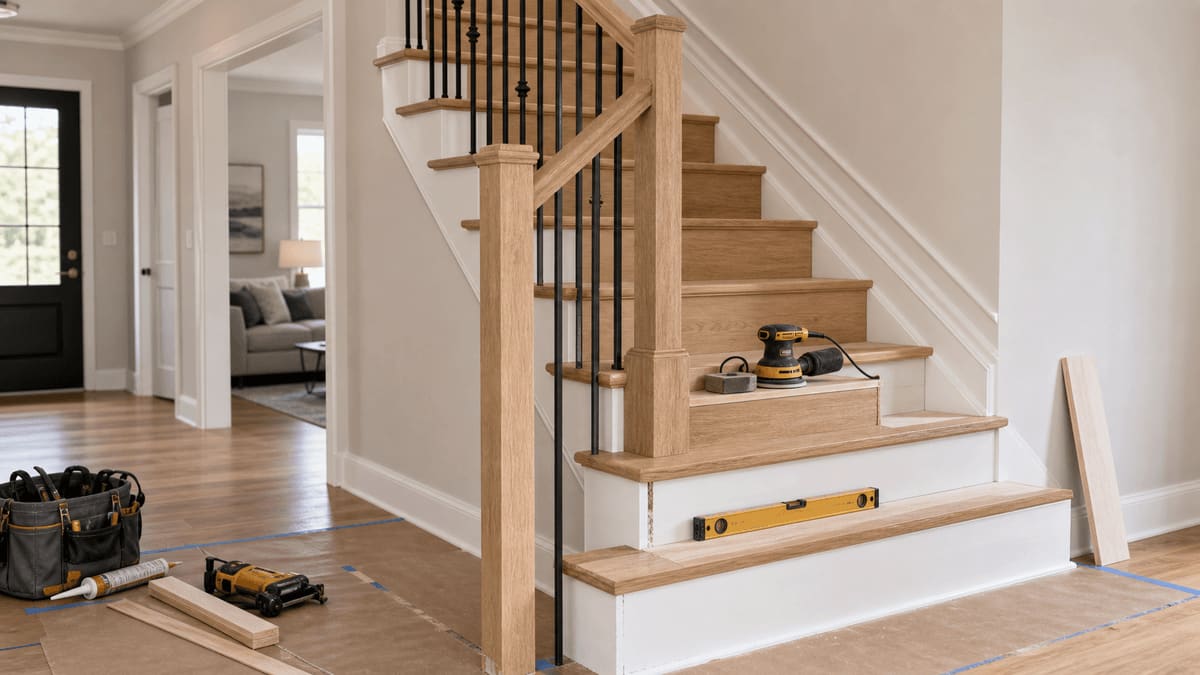
Refinish vs replace
The biggest fork in staircase cost is whether you keep the existing structure:
- Refinish ($52–$90 per tread) — sand, stain, and reseal the existing treads and risers. For cosmetic wear; a 13-step oak run runs about $1,500–$2,400.
- Replace ($235–$400 per tread to build new) — for cracked treads, sagging stringers, a code-required rebuild, or a material change. A new oak straight run with balustrade is $8,700–$15,100.
If the structure is sound and you just dislike the look, refinishing is a fraction of the cost of a rebuild.
Wood species: pine, oak, or walnut
Tread material drives a big share of a new staircase's cost, multiplied across every step:
- Pine ($23–$40 per tread) — paint-grade; fine for carpeted or painted stairs.
- Red oak ($52–$90 per tread) — the residential standard for a stained finish; hard, widely available.
- Walnut / hickory ($105–$180 per tread) — premium species for high-end stained runs.
Add risers, a handrail ($23–$40 per ft wood), balusters ($35–$60 each), and newel posts ($294–$500 each) to complete a balustrade.
Stair types and the code that governs them
Type sets both price and feasibility: a straight run is cheapest; a spiral kit ($3,500–$9,000 installed) saves floor space but is tight to use and move furniture on; an attic pull-down ($1,500–$2,400) is a quick access solution; a custom curved or open-stringer staircase runs $20,000–$60,000+. Any rebuild has to meet IRC stair code — roughly a 7-3/4″ max rise, 10″ min tread depth, a 34–38″ handrail height, and baluster gaps under 4″. Older homes frequently fail current code, so a rebuild often includes bringing dimensions up to standard.
Frequently asked questions
How much does a staircase cost in 2026?
Refinishing a 13-step run: $1,500-$2,400. New oak straight run with railings: $8,700-$15,100. Spiral kit installed: $3,500-$9,000. Attic pull-down stair: $1,500-$2,400 installed. Custom curved or open-stringer staircases run $20,000+.
Refinish vs new staircase?
Refinishing keeps the existing structure (treads, risers, stringers) and just sands + restains + reseals. Costs $40-$90 per step. A full new staircase is the right answer when treads are cracked, risers are sagging, code requires changes (rise/run, baluster spacing), or you want a different material.
Are oak treads worth it vs pine?
Oak treads ($40-$90 each) are the residential standard for stained finish. Pine ($15-$40) is fine for paint-grade finish. Walnut, hickory, and maple ($80-$180) are premium choices for higher-end homes. Engineered hardwood treads exist but most builders prefer solid wood for runs.
What hardwood is best?
Red oak is the residential standard ($40-$90/tread). Pine is paint-grade ($15-$40). Walnut/hickory premium ($80-$180). Engineered hardwood OK for treads but most builders prefer solid.
Code requirements?
2021/2024 IRC: max 7-3/4-in riser height (R311.7.5.1), min 10-in tread depth (R311.7.5.2), min 36-in stairway width (R311.7.1), min 6-ft-8-in headroom measured vertically from the tread nosing line (R311.7.2), handrail height 34-38 in (R311.7.8.1), and a guard that will not pass a 4-in sphere (R312.1.3). Older homes are often non-compliant; budget for upgrades on a full rebuild. Your jurisdiction may have adopted a different edition or local amendments — confirm with your building department before you build.
Can I DIY?
Refinish — yes, weekend project for a confident DIYer with a sander. New structural run — pro work, both for code and for the load path.
How much does it cost to redo stairs?
Refinishing an existing run (sand, stain, reseal) is about $52-$90 per tread, or $1,500-$2,400 for a typical 13-step staircase. Building a new oak run with balustrade is $8,700-$15,100; a custom curved staircase can exceed $20,000.
Should I refinish or replace my staircase?
Refinish ($52-$90 per tread) if the structure is sound and the wear is cosmetic. Replace ($235-$400 per tread to build new) if treads are cracked, the stringers sag, code requires changes, or you want a different material.
How much is a spiral staircase?
A pre-fabricated steel spiral kit runs $3,500-$9,000 installed. They save floor space but are tight for daily use and moving furniture, and any permanent staircase still has to meet local rise, tread, and handrail code.