Interior Paint Cost Calculator (2026)

Estimate gallons, primer, and labor by room size, paint finish, coat count, and trim. 2026 data; not a contractor bid.

By Martin Lashgari, Ph.D., P.E., PMP · Last reviewed July 2026

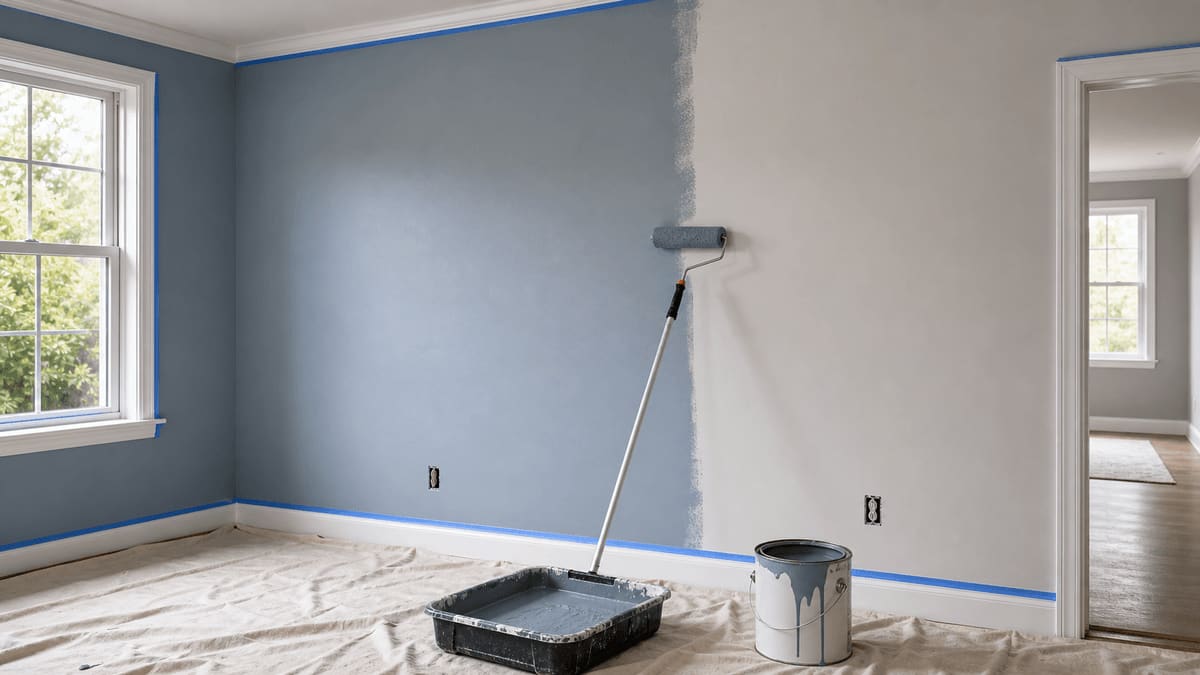
Interior room with blue painter's tape masking trim, a roller mid-coat on a blue accent wall, and a paint tray and gallon can on a drop cloth

Enter your paint project

Includes labor, equipment, and contractor markup. Paint never requires a permit.

Common projects

Room dimensions

Set to 0 for a single accent wall.

Paint & finish

Uses the first 3 digits as a planning zone (not exact local pricing). Overrides state average when matched.

Your paint estimate

Estimated installed range
Calculating…
Materials
$0
Labor
$0
Per sq ft
$0

Cost breakdown

Interior Paint cost breakdown: quantity and estimated range for each line item
ItemQuantityEstimated range
Planning estimate, not a bid. 2026 ranges informed by HomeGuide, Angi, Improovy.
What's not included: wallpaper removal, drywall repair beyond patching (use the drywall calculator), exterior paint, lead-paint testing or abatement, and wall-paper installation.

Bid check

Got a painter's quote? Compare it to the planning range.

Quote per sq ft
$0
Range check
Scope risk
Add a quote amount to compare it against the current estimate.

Methodology & sources

What this is: a planning-range interior paint calculator informed by 2026 cost guides (HomeGuide, Angi, Improovy, Knapp Painting).

Coverage: 1 gallon covers ~350-400 sq ft per coat (mid-point 375). Primer covers ~250-350 sq ft (mid-point 300). Two coats is standard for color-quality finishes.

Labor is modeled from per-unit installed rates with a crew-rate sanity check ($45-$85/crew-hr loaded billing rate), informed by BLS OEWS 47-2141 (Painters).

Last updated: July 2026. Full methodology →

Helpful materials & tools for this project

Interior paint is the paint plus the prep and application supplies:

  • Interior paint & primer — Your calculator's gallon count, by sheen and quality.
  • Rollers, brushes & trays — The application kit.
  • Painter's tape & drop cloths — For clean lines and protected floors.
  • Spackle & sandpaper — Patches holes before the first coat.

Suggested materials to help you plan — not an endorsement, and never a contractor referral.

Cost simulator Monte Carlo simulation See the full range of likely costs — with the odds

For a typical 8x10 bathroom, the installed planning band runs $1,714 to $2,770 nationally before regional adjustment.

What this project costs in different metros

Regional labor and material markets move the installed price. These bands come from the same engine as the calculator above, run at each metro's real cost multipliers — enter your ZIP in the calculator for a figure tuned to your exact area. National reference: $1,700–$2,750.

Interior Paint typical installed cost by metro area, compared with the national reference
MetroTypical installed rangevs. national
San Francisco, CA$2,350–$3,900+39%
New York, NY$2,400–$4,000+43%
Boston, MA$2,000–$3,300+18%
Chicago, IL$2,250–$3,650+31%
Atlanta, GA$2,150–$3,500+25%
Houston, TX$1,950–$3,150+14%
Miami, FL$1,700–$2,7500%
Phoenix, AZ$1,850–$2,950+7%

Planning ranges, not contractor quotes. Multipliers are rounded regional planning indices (see methodology), not a reproduction of any proprietary cost table.

What moves this price the most

Vary one input across its full range while holding everything else at the typical scenario, and this is how far each choice can move the installed estimate — measured by running the calculator's own engine. The widest bars are where your decisions matter most; the figures show the cheapest-to-priciest span each input creates on its own.

  • Width (ft)$1,000–$8,500
  • Length (ft)$1,250–$7,800
  • Wall height (ft)$2,100–$3,200
  • Surface prep$2,050–$2,450
  • Include ceiling?$1,850–$2,250
  • Primer needed?$1,900–$2,250

A tornado view: each row varies a single input; a real project moves several at once, so totals aren't additive.

How much does interior painting cost in 2026?

Interior painting runs $2.75 to $4.70 per square foot in 2026 ($2.75/sf for walls only, $4.70/sf with walls + ceiling + trim). Most single rooms cost $900-$3,800 each; whole-floor projects run $7,100-$11,900.

ProjectWall areaGallonsInstalled cost
12x12 bedroom (walls + ceiling)~528 sf3-4$2,300 – $3,800
16x18 living room (9 ft walls + ceiling + trim)~900 sf5-6$3,700 – $6,100
8x10 bathroom (semi-gloss + primer)~368 sf2-3$1,700 – $2,800
Whole floor 1500 sf (walls + ceilings + trim)~2000 sf11-13$7,100 – $11,900
Single accent wall (12 ft x 9 ft, premium)108 sf1$900 – $1,200

Paint finishes by room

  • Flat / matte — ceilings, low-traffic walls. Hides drywall imperfections; not washable.
  • Eggshell — living rooms, dining rooms, bedrooms. Slight sheen, mostly washable.
  • Satin — hallways, kid's rooms, family rooms. Mild sheen, very washable.
  • Semi-gloss — kitchens, bathrooms, laundry rooms, trim. Durable, scrubable.
  • Gloss — doors, trim, accent surfaces. Most durable but reveals every imperfection.

Frequently asked questions

How much does interior painting cost in 2026?

Interior painting runs $2.75-$4.70 per square foot installed in 2026 (walls only, $4.70 with walls + trim + ceilings). A 12x12 bedroom runs $2,300-$3,800. Whole-floor 1500 sf paint job runs $7,100-$11,900.

How many gallons of paint do I need?

One gallon covers 350-400 sq ft per coat. For two coats on a typical 12x12 room (walls + ceiling, ~528 sf), you need 3-4 gallons. Add 5% extra for waste and touch-ups.

What's the best paint finish for interior walls?

Flat / matte hides imperfections but isn't washable - good for ceilings and low-traffic walls. Eggshell is the most popular for living areas. Satin is durable for bedrooms and hallways. Semi-gloss for kitchens, bathrooms, and trim. Gloss only for trim, doors, and accents.

Do I need to prime?

Prime when going over bare drywall, dramatically lighter paint over dark, stains (water, smoke), or after major drywall repair. Existing painted walls in a similar color usually don't need primer. Primer adds ~$0.50-$1.00/sf material + labor.

Can I paint over wallpaper?

Yes but the result is rarely good. Seams show through. Better to remove wallpaper, repair any drywall damage, prime, then paint. The labor saved by painting over is usually offset by needing extra coats.

How long does painting a room take?

A pro crew finishes a 12x12 bedroom in half a day (4-6 hours). DIY typically 2-3x as long, especially with cutting in trim.

Why does the calculator show a price range?

Paint labor varies 30-50% by region, painter skill, prep level, and brand of paint. A range gives an honest planning estimate.

Common mistakes & questions

  • Skip primer on color change — going light over dark can need 3-4 coats without primer.
  • Skip wall prep — patching, sanding, and washing soak up 30-50% of total time.
  • Wrong sheen — flat hides imperfections but doesn't clean; eggshell/satin for high-traffic; semi-gloss for trim.
  • Cheap rollers/brushes shed bristles into wet paint.
  • Forget ceiling — color choice and primer plan affect total job time significantly.
  • Ask your contractor: brand/product line, sheen by surface, primer plan, # of coats, prep included.

When this estimate is wrong

  • Surface prep drives the number — patching cracks and nail pops, scraping loose paint, and sanding can equal or exceed the cost of the paint itself on a neglected wall.
  • Color and substrate change the coat count — dark-to-light, deep accent colors, and bare new drywall usually need a dedicated primer plus an extra finish coat the estimate may assume you skip.
  • Ceilings, trim, doors, and closets price separately — a "walls only" figure climbs quickly once cut-in-heavy trim, doors, and ceilings are added.
  • Pre-1978 homes carry lead-safe rules — if disturbed paint tests positive, RRP-certified containment and cleanup add labor a standard repaint does not include.
  • Paint grade and sheen matter — premium lines and higher sheens cost more per gallon but often cover in fewer coats; the cheapest paint can cost more in labor.
  • High walls and stairwells slow the work — anything past comfortable roller reach means ladders or scaffolding and a slower, more careful pace.
  • Small rooms carry a minimum — many painters have a per-visit minimum, so a single small room rarely scales down to the per-square-foot rate.