Storage Shed Cost Calculator (2026)

Estimate resin / metal / wood kit, pre-built, or custom-built sheds. Pick size, foundation, electrical, and add-ons. 2026 data; not a contractor bid.

By Martin Lashgari, Ph.D., P.E., PMP · Last reviewed June 2026

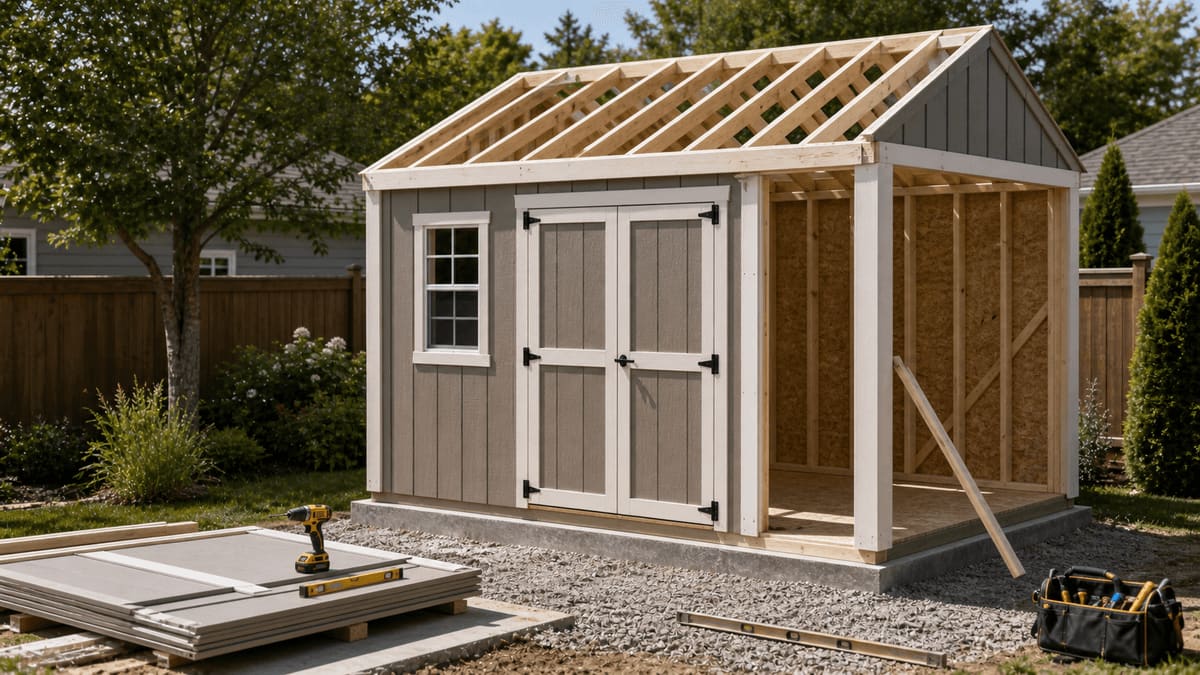
New wood-frame backyard storage shed with a metal roof, side door, and a ramp on a level gravel pad

Enter your shed project

Includes labor, equipment, permit (where required), and contractor markup.

Common projects

Scope & size

Uses the first 3 digits as a planning zone (not exact local pricing). Overrides state average when matched.

Foundation, electrical, add-ons

Your shed estimate

Estimated installed range
Calculating…
Materials
$0
Labor
$0
Per sq ft
$0

Cost breakdown

ItemQuantityEstimated range
Planning estimate, not a bid. 2026 ranges informed by Suncast / Lifetime / Tuff Shed / Heartland MSRP, HomeGuide, HomeAdvisor, Homewyse, and BLS regional wage data.
What's not included: insulation / interior finish for habitable use, plumbing / drainage, septic tie-in, full HVAC, smart-home wiring, landscape restoration after delivery.

Bid check

Got a contractor quote? Compare it to the planning range.

Quote
$0
Range check
Scope risk
Add a quote amount to compare it against the current estimate.

Methodology & sources

What this is: a planning-range shed calculator informed by Suncast / Lifetime / Tuff Shed / Heartland MSRP, HomeGuide, HomeAdvisor, Homewyse, and licensed cost-estimating references.

Labor is modeled from per-unit installed rates with a crew-rate sanity check ($55-$110/crew-hr loaded billing rate), informed by BLS OEWS 47-2031 (Carpenters).

Last updated: May 2026. Full methodology →

Cost simulator Monte Carlo simulation See the full range of likely costs — with the odds

How much does a shed cost in 2026?

TypeRangeTimeline
Resin / plastic kit (8x10)$700-$2,2001 weekend DIY
Metal kit (8x10)$900-$2,5001 weekend DIY
Wood kit (10x12) installed$2,500-$8,0002-3 days
Pre-built vinyl (10x12)$3,500-$10,0001 day delivery
Custom stick-built (12x16)$8,000-$20,0001-2 weeks
Concrete pad add-on$600-$2,5001-2 days
Electrical add-on$700-$2,5001 day

Kit vs pre-built vs custom

The build method is the biggest cost lever, far more than size:

  • Resin or metal kit ($700–$2,500) — flat-packed, a weekend DIY assembly. Cheapest, but lighter-duty.
  • Wood kit, installed ($2,500–$8,000) — a real wood building put together by a crew over 2–3 days.
  • Pre-built, delivered ($3,500–$10,000) — built off-site and craned/rolled into place in a day. The convenience option.
  • Custom stick-built ($8,000–$20,000) — framed on site to match your house; the route for a workshop, studio, or "she-shed."

Don't skip the foundation

A shed set on bare dirt traps moisture, rots its floor, and racks out of square within a few seasons — the foundation is cheap insurance. A gravel pad ($1.76–$3 per sq ft) over landscape fabric is the practical minimum and handles drainage. A concrete slab ($7–$12 per sq ft) is worth it for a heavy workshop, riding mower, or anything you'll roll in and out. Block piers ($352–$600) suit sloped or soft ground. Whatever the shed costs, budgeting the right base under it is what makes it last.

Permits, power, and the add-ons

Many jurisdictions exempt small sheds (commonly under ~100–200 sq ft or a height limit) from a permit, but almost all enforce setbacks from property lines — check before you place it, because moving a built shed is its own cost. Running power ($700–$2,500 for an outlet + light circuit) turns a shed into a workshop but needs a permit and usually a licensed electrician. Common extras: a ramp ($294–$500) for mowers, windows ($235–$400 each) for light, and interior shelving ($294–$500).

Frequently asked questions

How much does a storage shed cost in 2026?

Resin/plastic kit: $700-$2,200 installed. Metal kit: $900-$2,500. Wood kit: $2,500-$8,000 with foundation. Pre-built vinyl shed delivered: $3,500-$10,000. Custom 12x16 stick-built: $8,000-$20,000. Add electrical $700-$2,500 and concrete pad $5-$12/SF if needed.

Do I need a permit for a shed?

Many jurisdictions exempt sheds under 120-200 sq ft without electrical. Permit is typically required if any of: floor area over the exempt threshold (often 120, 144, or 200 sf), any electrical hookup, attached to the house, plumbing, or sited within setback. Always check your local building department.

What foundation do I need?

Resin/metal kits: gravel pad ($1.50-$3/SF) is fine. Wood kits + pre-built: gravel or concrete-block piers ($200-$600). Custom or large sheds (over 120 sf): concrete slab ($5-$12/SF). Skipping the pad is the #1 reason sheds fail — water wicks up and rots the floor.

Wood vs vinyl vs metal?

Wood = best looks + customization (paint/stain). Vinyl = lowest maintenance. Metal = cheapest + most secure but rusty in humid/coastal. Resin = lightest + cheapest but shorter life (10-15 yr).

Can I DIY?

Resin / metal / wood kits — yes, weekend project. Pre-built — comes assembled. Custom stick-built — pro carpentry work unless you're experienced.

How much does it cost to build a shed?

A resin or metal DIY kit runs $700-$2,500, a wood kit installed $2,500-$8,000, a pre-built delivered shed $3,500-$10,000, and a custom stick-built shed $8,000-$20,000. Add a foundation pad and any electrical separately.

Do I need a permit for a shed?

Often not for small sheds under a local size or height threshold (commonly ~100-200 sq ft), but nearly all areas enforce property-line setbacks, and any electrical needs a permit. Confirm both with your building department before placing it.

Does a shed need a foundation?

Yes - a shed on bare dirt rots and shifts. A gravel pad ($1.76-$3 per sq ft) is the minimum; a concrete slab ($7-$12 per sq ft) is worth it for heavy equipment or a workshop you roll things into.

Common mistakes & questions

  • Skip the foundation — direct to dirt = rot in 2-5 yr.
  • Wrong site — uphill of foundation plantings = rot. Below grade = floods. Verify drainage before delivery.
  • Skip permit on borderline size — fines + may need to demo.
  • Hurricane straps in coastal — required by code in FL/SC/NC; kits often don't include.
  • Skip ramp — rolling mowers / wheelbarrows in/out is a chore without one.
  • Overhead branches / power lines — clear delivery / crane access before scheduling.
  • Ask your contractor: foundation type, hurricane fasteners (where applicable), warranty period, electrical compliance, setback verification.

When this estimate is wrong

  • Hilly site requiring grading or retaining wall: +$1,000-$5,000.
  • Insulated and finished interior (workshop / studio): 2-3x base cost.
  • Custom siding to match house (Hardie, cedar shingle, stucco): +30-60%.
  • Hurricane / coastal code uplift: +10-20%.
  • HOA review fees + design changes.
  • Land clearing / stump removal: separate scope.