Fence Cost Calculator (2026)

Estimate the cost to install a fence. Pick your length, height, material (wood, vinyl, aluminum, chain link, wrought iron), gate count, and state, and we'll compute a planning range. 2026 data; not a contractor bid.

By Martin Lashgari, Ph.D., P.E., PMP · Last reviewed July 2026

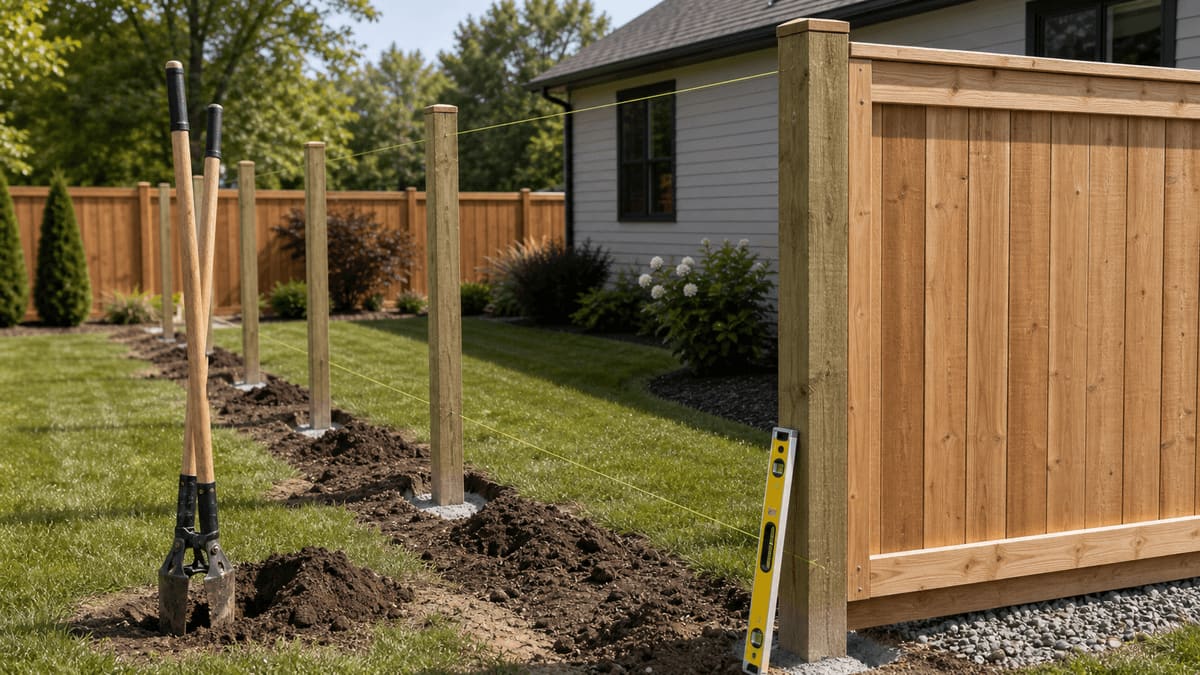
Cedar privacy fence with stained vertical pickets and freshly set wood posts in dug holes along a string line

Enter your fence project

Includes labor, equipment, contractor markup, and permits.

Common projects

Fence dimensions

3-4 ft front yard typical; 6 ft privacy back yard standard; 8+ ft commercial / tall.

Material & site

Uses the first 3 digits as a planning zone (not exact local pricing). Overrides state average when matched.

Gates

Automatic gates include motor opener, photo eyes, wiring.

Site work

Your fence estimate

Estimated installed range
Calculating…
Materials
$0
Labor
$0
Per linear ft
$0

Cost breakdown

Fence cost breakdown: quantity and estimated range for each line item
ItemQuantityEstimated range
Planning estimate, not a bid. 2026 ranges informed by published cost guides (HomeGuide, Angi, Inch Calculator). Compare written bids on an identical scope for accurate local pricing.
What's not included: survey costs ($300-$700), removing tree roots, hauling spoil dirt, painting/staining (annual sealing for wood), and HOA-required design approvals.

Bid check

Got a fence contractor quote? Compare it to the planning range.

Quote per lf
$0
Range check
Scope risk
Add a quote amount to compare it against the current estimate.

Methodology & sources

What this is: a planning-range fence calculator informed by 2026 cost guides (HomeGuide, Angi, Inch Calculator, FenceAdvisors).

Material pricing is per-linear-foot installed by material type. Tall fences (over 8 ft) get a 15% material premium.

Posts auto-computed at 8 ft on-center spacing plus 4 corner/end posts. Each post includes concrete (1-2 50-lb bags + gravel) and dig+set labor.

Labor is modeled from per-unit installed rates with a crew-rate sanity check ($55-$95/crew-hr loaded billing rate), informed by BLS OEWS 47-2061 (Construction Laborers) and 47-2031 (Carpenters), then loaded with payroll burden, crew composition, equipment overhead, and contractor profit.

Per-rate sources stored in CSV with each row's source_url, source_date, region, basis.

Last updated: July 2026. Full methodology →

Helpful materials & tools for this project

Fencing is mostly posts, panels, and hardware — the pieces behind your estimate:

  • Fence panels or pickets — Wood, vinyl, or aluminum — the largest material line.
  • Post concrete mix — Fast-setting mix for setting posts plumb.
  • Post caps & gate hardware — Hinges, latches, and caps that finish the run.
  • Post level & string line — Keeps posts plumb and the run straight.

Suggested materials to help you plan — not an endorsement, and never a contractor referral.

Cost simulator Monte Carlo simulation See the full range of likely costs — with the odds

For a typical 150 lf aluminum decorative, the installed planning band runs $8,892 to $15,488 nationally before regional adjustment.

Worked example: 150 lf aluminum decorative

To show exactly how the band is built, here's the calculator's own engine run on the 150 lf aluminum decorative scenario at national average pricing — the same line items the calculator produces for this project, laid out as a bill of quantities.

Line-item bill of quantities for the 150 lf aluminum decorative worked example, with category and installed range per item
Line itemCategoryInstalled range
Aluminum fence (4.5 ft)Materials$4,853 – $8,250
Post-hole concrete (22 posts)Materials$194 – $330
Post dig + set laborLabor$776 – $1,320
Walk-through gate (1)Materials$353 – $600
Crew install laborLabor$688 – $1,188
Equipment & tool allowanceEquipment$235 – $400
Fence building permitPermits$25 – $150
Mobilization / minimum chargeLabor$200 – $200
Contractor overhead & profitMarkup 25–29%$1,569 – $3,051
Installed total$8,892 – $15,488

National average, planning ranges not a bid. Change the size, material, or ZIP in the calculator above to reprice this exact breakdown for your project.

What this project costs in different metros

Regional labor and material markets move the installed price. These bands come from the same engine as the calculator above, run at each metro's real cost multipliers — enter your ZIP in the calculator for a figure tuned to your exact area. National reference: $8,900–$15,500.

Fence typical installed cost by metro area, compared with the national reference
MetroTypical installed rangevs. national
San Francisco, CA$10,150–$17,650+14%
New York, NY$10,200–$17,800+15%
Boston, MA$9,650–$16,800+8%
Chicago, IL$9,650–$16,750+8%
Atlanta, GA$9,800–$17,050+10%
Houston, TX$9,200–$16,050+4%
Miami, FL$8,900–$15,5000%
Phoenix, AZ$9,050–$15,750+2%

Planning ranges, not contractor quotes. Multipliers are rounded regional planning indices (see methodology), not a reproduction of any proprietary cost table.

What moves this price the most

Vary one input across its full range while holding everything else at the typical scenario, and this is how far each choice can move the installed estimate — measured by running the calculator's own engine. The widest bars are where your decisions matter most; the figures show the cheapest-to-priciest span each input creates on its own.

  • Total length (linear feet)$2,300–$137,200
  • Automatic gates (with opener)$12,200–$26,500
  • Fence material$7,650–$15,950
  • Walk-through gates (4 ft)$11,700–$16,500
  • Double drive gates (8-12 ft)$12,200–$16,950
  • Height (ft)$12,200–$13,450

A tornado view: each row varies a single input; a real project moves several at once, so totals aren't additive.

How much does it cost to install a fence in 2026?

Most residential fences run $12 to $60 per linear foot installed in 2026, with the national average around $20-$45. Per linear foot, material is the biggest swing: chain-link at $10-$25/lf is the cheap end, wrought iron at $30-$80/lf the high end. How much fence you run still moves the total more than the material does — see what drives project costs. The project totals below are all-in: they add posts, gates, equipment, permits, and contractor markup on top of the per-foot fence run.

ProjectLengthMaterialInstalled cost
Backyard chain-link150 lfGalvanized chain-link$5,600 – $9,700
Backyard PT wood150 lfPressure-treated pine$6,100 – $10,700
Cedar privacy200 lfCedar$9,600 – $16,700
Vinyl privacy300 lfVinyl$18,000 – $31,500
Aluminum decorative150 lfAluminum$8,900 – $15,500
Wrought-iron estate400 lfWrought iron + automatic gate$33,600 – $58,600

What drives fence cost

  • Material — chain-link $10-$25/lf vs wrought iron $30-$80/lf is a 3-8x range.
  • Height — 6 ft is the residential standard; 8+ ft tall fences add 15% to material cost.
  • Posts — one post every 8 ft + 4 corner/end posts. Concrete and labor add $40-$90 per post.
  • Gates — walk-through $200-$600 each, double-drive $300-$1,200, automatic $1,900-$6,000+.
  • Site conditions — sloped terrain adds $3-$10/lf; brush clearing $2-$6/lf; old-fence removal $3-$8/lf.
  • Region — California and New York labor 30-35% above national average.

Choosing the right fence material

Pressure-treated wood pine

$15-$30/lf installed. Cheapest wood option. Lasts 15-20 years with annual sealing/staining. Boards may warp or split over time. Standard 6 ft dog-ear privacy panels are widely available.

Cedar

$20-$42/lf installed. Naturally rot-resistant and insect-repellent. Ages to silver-gray; stain to keep warm tone. 20-30 year lifespan. Common in board-on-board, shadowbox, and split-rail styles.

Vinyl / PVC

$30-$60/lf installed. Zero maintenance — no painting, sealing, or staining ever. 25-30+ year lifespan. White is most common; tan and gray available. Brittle in extreme cold; can crack.

Aluminum

$25-$55/lf installed. Powder-coated aluminum tubes; ornamental look. Mostly decorative (not great privacy). Long lifespan, no maintenance.

Chain-link

$10-$25/lf installed. Cheapest residential option. Galvanized steel mesh on metal posts. 4-6 ft heights typical. Vinyl-coated black or green available. Functional, not pretty.

Wrought iron

$30-$80/lf installed. Heavy steel ornamental fencing; security plus aesthetic. 50+ year lifespan with rust touch-ups. Common around pools and estates.

Composite

$30-$55/lf installed. Mix of recycled wood and plastic. Looks like wood but doesn't rot. 20-30 year lifespan.

Frequently asked questions

How much does it cost to install a fence in 2026?

Most residential fences run $12-$60 per linear foot installed. Chain-link is cheapest at $10-$25/lf, wood privacy $15-$42/lf, vinyl $30-$60/lf, aluminum $25-$55/lf, wrought-iron $30-$80/lf.

Do I need a permit to build a fence?

Most municipalities require fence permits. Permit fees range from $25 to $150. Front-yard fences are typically limited to 3-4 ft, side and back yards 6-8 ft. Always check with your local building department before digging post holes.

What's the cheapest fence material?

Chain-link at $10-$25 per linear foot installed is the cheapest residential option. Pressure-treated wood pickets at $15-$30/lf are next. Vinyl, aluminum, and composite all run $25-$60/lf.

How long does a fence last?

Pressure-treated wood: 15-20 years. Cedar: 20-30. Vinyl: 25-30+. Aluminum: 30-50. Chain-link: 20-30. Wrought iron: 50+ with maintenance.

How deep should fence posts be set?

2.5 ft deep for 6 ft fences in stable soil; 3 ft for 8 ft+ fences or in frost-line regions (must extend below frost depth). Set in concrete with a 4-6 in gravel base for drainage.

Can I put a fence on my property line?

Most jurisdictions require fences to be set back 4-12 inches from the property line. A fresh boundary survey ($300-$700) is wise if you're not sure where your line is. Disputes with neighbors over fence placement are common and expensive.

How much does a gate add to the cost?

Walk-through (pedestrian) gate: $200-$600. Double drive gate (vehicles): $300-$1,200. Automatic gate with opener: $1,900-$6,000+. Material matches your fence.

Should I DIY a fence?

For chain-link or simple PT wood under 100 lf on flat ground — yes, DIY can save 40-50% on labor. For longer runs, slopes, or harder materials (vinyl, aluminum, wrought iron), the labor savings often aren't worth the time and tool rental.

Why does the calculator show a price range?

Fence prices vary 30-60% by region, season, and contractor. Material brand selection alone can move a quote 20%. A range gives an honest planning estimate.

Common mistakes & questions

  • Skip 811 (Call Before You Dig) — 2-3 business days lead time required.
  • Skip property survey — fence on the wrong side of a property line is the #1 neighbor dispute trigger.
  • Skip post depth — frost-line + 6 in is the rule; shallow posts heave annually.
  • Wrong wood — untreated cedar/pine rots; ground-contact PT or cedar/composite for posts.
  • Ask your contractor: post depth, gravel/concrete footing, post material grade, gate hardware spec.

When this estimate is wrong

  • Post holes are the hidden labor — posts set to below the frost line with concrete footings are what keeps a fence from heaving, and shallow holes to save money show up as leaning posts within a year.
  • Hard digging changes the price — rocky, clay, or root-bound soil, or ground with buried debris, slows every hole and can force hand-digging or an auger swap.
  • Sloped ground adds work — a fence on a grade must be stepped or racked panel by panel, which takes more time and more material than a run on flat ground.
  • Gates cost more than a fence section — every gate needs heavier posts, hinges, latches, and bracing, so the number of gates moves the total more than the same footage of straight fence.
  • Property lines and utilities come first — a survey to confirm the line and a utility locate before digging are prerequisites; a fence set on the wrong side is a costly thing to move.
  • Permits and HOA rules can apply — setback limits, height caps, and HOA approval vary locally and can dictate materials or placement, adding time before work starts.
  • Old-fence removal is a separate line — tearing out and hauling away an existing fence, especially one set in concrete, is labor and disposal a new-fence-only figure skips.