Gas vs wood vs electric vs pellet
| Type | Installed | Best for |
|---|
| Electric (with surround + mantel) | $7,900 – $13,800 | Ambiance + supplemental heat, no venting |
| Gas insert | $8,100 – $14,100 | Convenience in an existing masonry fireplace |
| Gas zero-clearance | $16,600 – $28,900 | A new fireplace where none exists |
| Wood insert (EPA-certified) | $8,200 – $14,400 | Real fire + efficiency in existing masonry |
| Pellet stove | $7,100 – $12,500 | Efficient zone heating from a hopper |
Electric needs no vent and typically carries a built-in heater of about 1.5 kW — supplemental heat for one room, like a space heater, not a heating system. Gas is the convenience option, vented the way its listing specifies. Wood gives a real fire: an insert needs a lined, properly sized chimney, a new-build unit needs the chimney system its listing names, and a wood stove or insert sold new must meet EPA’s wood-heater standard (open masonry fireplaces fall outside it). Pellet stoves also fall under that standard; they feed fuel automatically and burn steadily, but need electricity to run and dry storage for pellets.
Insert vs zero-clearance new build
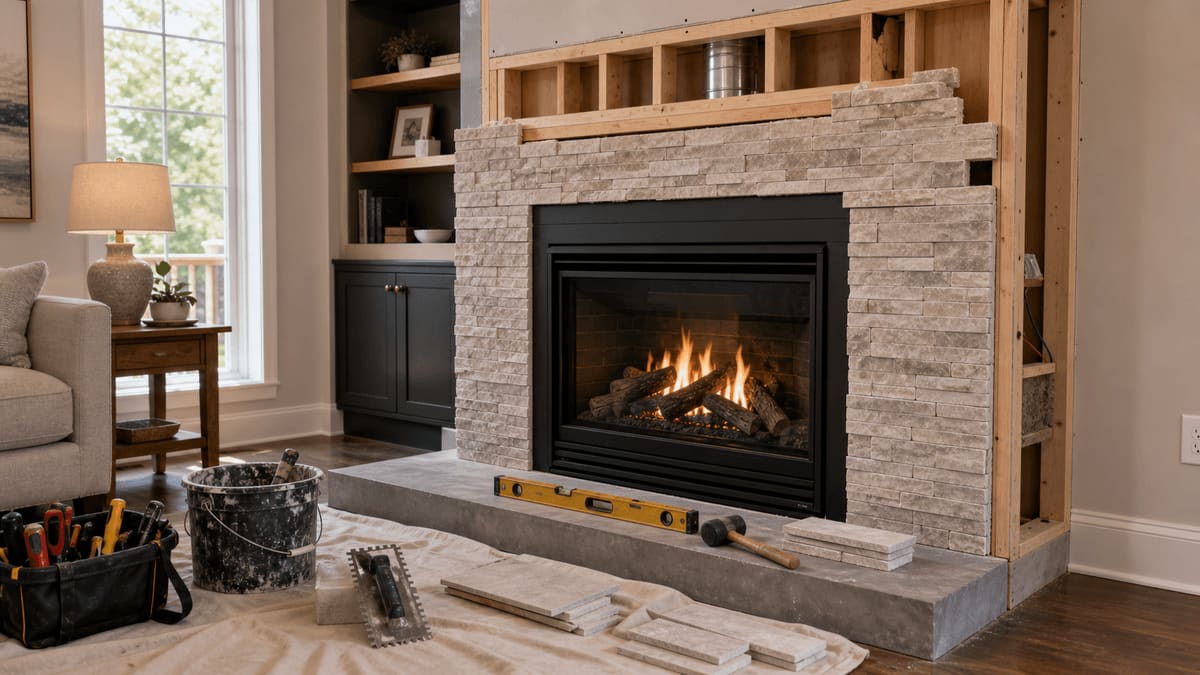
The single biggest cost split is whether you already have a fireplace. An insert ($8,100–$14,100) slides a sealed unit into an existing masonry firebox — relatively quick. A zero-clearance new install ($16,600–$28,900) builds a fireplace where there wasn't one: framing a chase ($1,470–$2,500), running new venting, and finishing the surround. If you're adding a fireplace to a room that never had one, you're in zero-clearance territory, not insert pricing.
The costs beyond the unit
The appliance is only part of the bill. Budget for: a gas line run ($705–$1,200 plus $23–$40 per foot), venting (direct-vent $17–$30 per foot, Class-A wood chimney $47–$80 per foot), the surround and mantel (stone or tile $47–$80 per sq ft, a mantel shelf $882–$1,500), electrical for the blower and ignition ($294–$500), and tearing out an old fireplace if you're replacing one ($1,176–$2,000). These extras are why two "gas fireplace" quotes can differ by thousands.
Frequently asked questions
How much does a fireplace cost in 2026?
At the scope stated for each: electric with surround and mantel $7,900-$13,800; a gas insert into existing masonry, including about 20 ft of gas line, $8,100-$14,100; a gas zero-clearance new install with chase, surround, mantel and gas line $16,600-$28,900; an EPA-certified wood insert with about 25 ft of liner $8,200-$14,400; a free-standing pellet stove with 15 ft of vent $7,100-$12,500. A longer gas run, taller chimney or a stone surround on an insert adds to those.
Gas vs wood vs electric?
Electric ($7.9k-$13.8k) is the cheapest and simplest: no vent, and typically a built-in heater of about 1.5 kW — supplemental heat, like a space heater, not a heating system. Gas ($8.1k-$28.9k) is clean and instant, and needs a gas line, venting of the type the unit is listed for, and a permit. Wood ($8.2k-$26k) gives a real fire and real heat; a wood stove or insert sold new must meet EPA’s residential wood-heater standard, and a wood chimney needs an annual sweep and inspection.
Are wood / gas fireplaces code-regulated?
Yes, by more than one authority. EPA’s residential wood-heater standard (tightened in 2020) covers wood stoves, wood inserts and pellet stoves sold new; open and masonry fireplaces fall outside it, although some states and cities restrict new wood-burning fireplaces or limit burning. Gas units are direct-vent, B-vent or vent-free according to their listing, and some jurisdictions ban vent-free units. A permit and inspection are required almost everywhere. The residential code requires carbon monoxide alarms outside each sleeping area in homes with fuel-burning appliances; exact placement rules vary by state, so follow the local code and the appliance instructions.
Code requirements?
Wood stoves and inserts: EPA-certified if sold new. Gas: vent type set by the unit’s listing (direct-vent, B-vent or vent-free, where allowed). Permit and inspection almost everywhere. Carbon monoxide alarms outside sleeping areas, placed to your state’s rules.
Best for resale?
Gas direct-vent and modern wood inserts add the most resale appeal. Electric and pellet stoves are room features, not whole-house value-adds.
Can I DIY?
Electric plug-in only. Gas and wood are pro work for code, safety, and warranty.
How much does it cost to install a fireplace?
An electric unit with surround and mantel runs $7,900-$13,800, a gas insert with its gas line $8,100-$14,100, a gas zero-clearance new install with chase, surround and gas line $16,600-$28,900, an EPA-certified wood insert $8,200-$14,400, and a pellet stove $7,100-$12,500. Inserts and stoves are priced without a new surround.
Gas or wood fireplace - which costs more?
They overlap: a gas insert is $8,100-$14,100 including its gas line, and an EPA-certified wood insert $8,200-$14,400. Wood needs a lined, properly sized chimney; gas needs a gas line and venting of the type the unit is listed for. Gas wins on convenience, wood on real-fire feel.
Can I add a fireplace where there is not one?
Yes - a zero-clearance unit ($16,600-$28,900) builds a fireplace in a room that never had one, which means framing a chase, running venting, and finishing a surround. That is why it costs more than an insert into existing masonry.