Paver Patio Cost Calculator (2026)

Estimate the cost to install a paver patio. Pick your size, material (concrete, brick, flagstone, travertine, bluestone, permeable), pattern complexity, and edging. 2026 data; not a contractor bid.

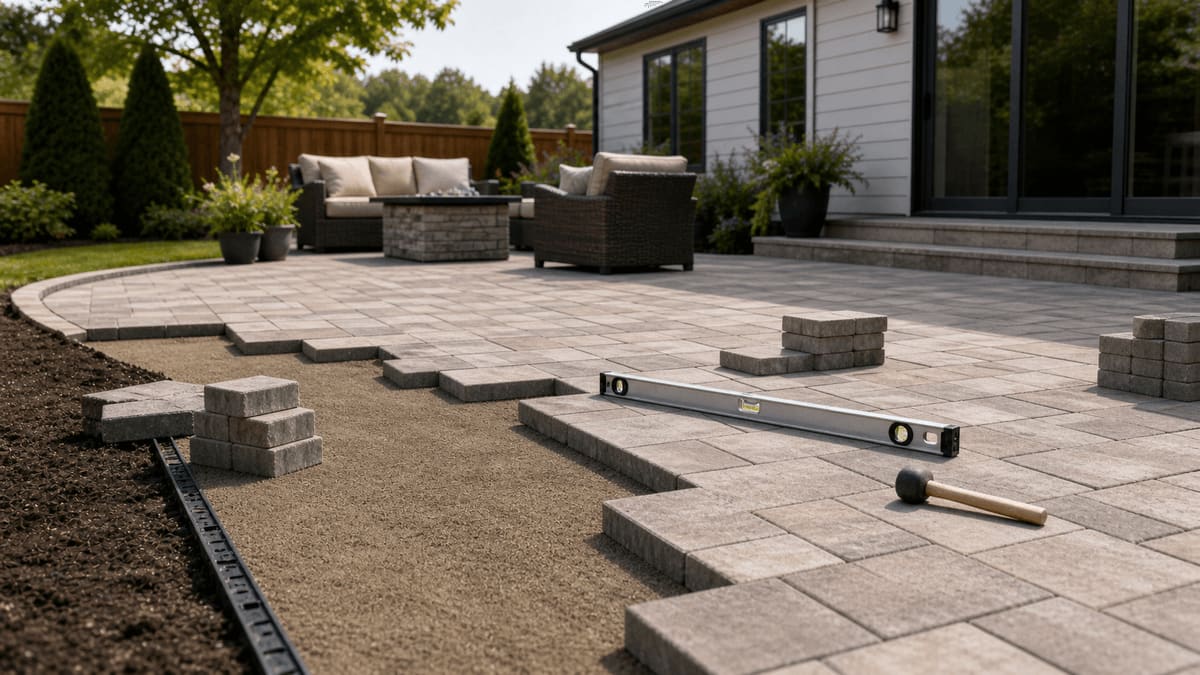
Stone paver patio being laid on a leveled stone-dust base with a screed level and rubber mallet beside a finished outdoor lounge area

Enter your patio project

Includes labor, equipment, contractor markup, and permits.

Common projects

Patio dimensions

Material & site

Uses the first 3 digits as a planning zone (not exact local pricing). Overrides state average when matched.
Complex patterns waste 10-15% more material and add labor time.

Your patio estimate

Estimated installed range
Calculating…
Materials
$0
Labor
$0
Per sq ft
$0

Cost breakdown

ItemQuantityEstimated range
Planning estimate, not a bid. 2026 ranges informed by HomeGuide, Angi, Inch Calculator. Get 2-3 local quotes.
What's not included: retaining walls, deep excavation under existing structures, drainage piping beyond the geotextile, fire-pit kits, outdoor kitchens, lighting, and pergolas.

Bid check

Got a contractor quote? Compare it to the planning range.

Quote per sq ft
$0
Range check
Scope risk
Add a quote amount to compare it against the current estimate.

Methodology & sources

What this is: a planning-range paver patio calculator informed by 2026 cost guides (HomeGuide, Angi, Inch Calculator).

Material pricing is per-sq-ft retail. Pattern complexity adds 10-15% to material waste and per-sq-ft labor.

Base layers auto-include 4-6 in compacted gravel + 1 in bedding sand + polymeric joint sand. Geotextile fabric is recommended.

Labor is modeled from per-unit installed rates with a crew-rate sanity check ($55-$95/crew-hr loaded billing rate), informed by BLS OEWS 47-2061 (Construction Laborers).

Last updated: May 2026. Full methodology →

How much does a paver patio cost in 2026?

Most paver patios run $12 to $30 per square foot installed in 2026. Material is the biggest swing factor — concrete pavers at $8-$15/sf installed are cheapest, premium natural stone (bluestone) at $25-$50/sf installed is the high end.

ProjectSizeConcrete paversFlagstone
Small patio10x10 (100 sf)$1,200 – $2,500$2,000 – $4,500
Standard patio12x16 (192 sf)$2,300 – $4,800$3,800 – $8,400
Large patio16x20 (320 sf)$3,800 – $8,000$6,400 – $14,000
Pool deck20x20 (400 sf)$4,800 – $10,000$8,000 – $17,500

What drives paver cost

  • Material — concrete $3-$6/sf to bluestone $12-$25/sf is a 3-8x range.
  • Pattern — herringbone / circle / diagonal patterns waste 10-15% more material and add $1-$3/sf labor.
  • Site prep — flat ground vs deep excavation can add $4-$6/sf.
  • Base depth — standard 4-6 in compacted gravel; vehicle-rated patios need 6-8 in.
  • Edging — plastic at $2-$5/lf vs concrete bond beam at $8-$20/lf.
  • Region — California and New York labor 30-35% above national.

Frequently asked questions

How much does a paver patio cost in 2026?

Most paver patios run $12-$30 per sq ft installed. A 12x16 concrete-paver patio runs $2,300-$4,800. A 16x20 flagstone patio runs $5,100-$11,200.

What's the cheapest paver?

Concrete pavers at $3-$6/sf material ($8-$15 installed). Brick is next at $5-$12 material. Natural stone (flagstone, travertine, bluestone) is the most expensive at $8-$25/sf material.

Do paver patios need a permit?

Most patios under 200 sq ft and below 30 in are exempt. Larger patios, those tied to a structure, or in floodplains usually need permits ($50-$200). Check locally.

How thick should the gravel base be?

4-6 in compacted gravel base for foot-traffic patios; 6-8 in for vehicle-rated paver driveways. Always over geotextile fabric to prevent base migration.

What's polymeric sand and do I need it?

Polymeric sand fills the joints between pavers and hardens when wet, locking pavers together and resisting weed growth. Skip it and you'll get sand wash-out and weeds within a year. One bag covers 50-100 sq ft.

How long do paver patios last?

Concrete pavers: 25-50 years. Brick: 50+ years. Natural stone: 75-100+ years. The base prep determines real-world lifespan more than the pavers themselves — a properly built base outlasts any paver type.

Can I lay pavers on dirt?

No. Pavers laid directly on soil settle, shift, and grow weeds. Always excavate, lay geotextile, compact gravel base, screed bedding sand, then place pavers. The base is what makes a paver patio durable.

Why does the calculator show a price range?

Material prices vary 30-60% by region, supplier, and brand selection. A range gives an honest planning estimate.

Common mistakes & questions

  • Skip base depth — 4-6 in compacted gravel base under a patio, 6-8 in under a driveway.
  • Skip geotextile — missing fabric layer below base lets clay pump up through joints in 2-3 yr.
  • Wrong slope — patios need a 1-2% slope away from the house; flat = pooling.
  • Skip polymeric sand — regular play sand washes out; polymeric locks pavers and resists weeds.
  • Skip edge restraints — pavers spread without spike-down restraints.
  • Ask your contractor: base depth + compaction, geotextile, drainage slope, jointing sand, edge restraint.

When this estimate is wrong

  • Hard access (rural, second-floor, no parking nearby) adds 10-25%.
  • Trip charge minimums — most contractors have a $200-$500 minimum, even for small jobs.
  • Local code (energy, hurricane, seismic, historic) can require upgrades beyond IRC default.
  • Disposal fees — landfill costs vary by state; tear-off jobs hit hard in CA/NY.
  • Seasonality — winter/early spring quotes are 10-20% lower than peak summer.
  • Supplier minimums — small material orders often add 10-15% over bulk pricing.
  • Permit timeline — permits add days to weeks; failed inspections add cost.