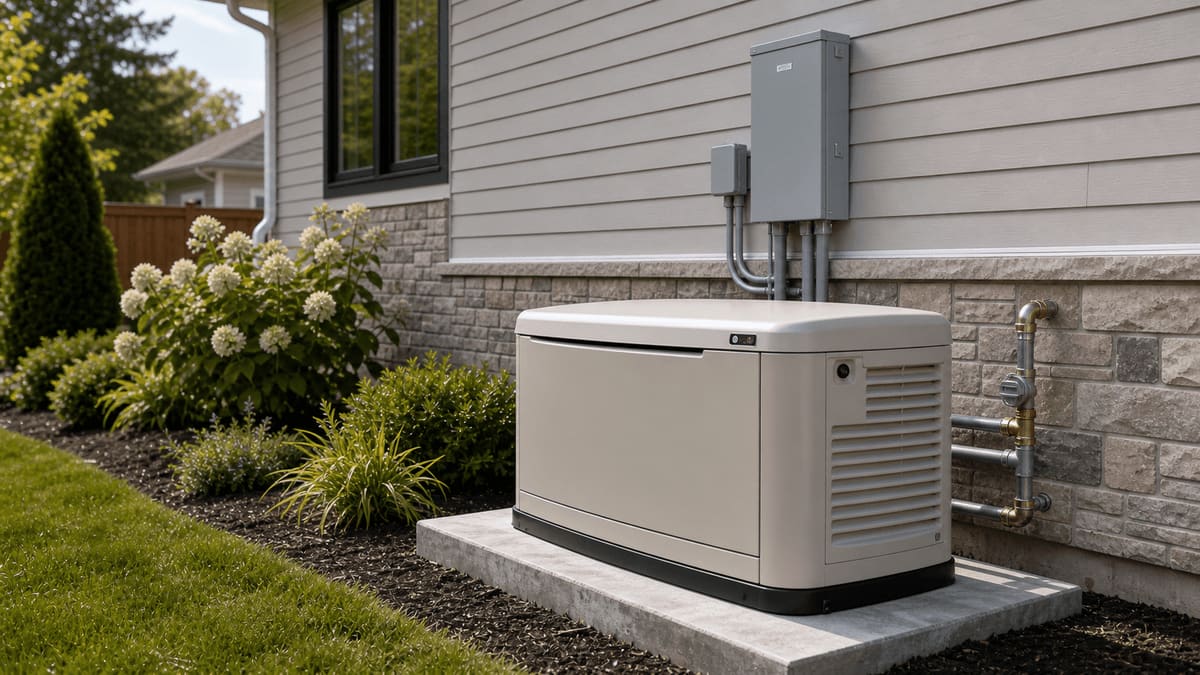
Portable vs whole-house standby
The first decision sets the price bracket:
- Portable + transfer switch ($4,400–$7,700) — you roll it out, fuel it with gas, and it powers essential circuits through a manual transfer switch or interlock. Cheapest, but hands-on and limited.
- Whole-house standby ($10,800–$28,300) — permanently installed, runs on natural gas or propane, and starts automatically within seconds of an outage via an automatic transfer switch.
Occasional short outages on a budget → portable. Frequent or long outages, medical equipment, well pump, or working from home → standby.
Sizing: what do you want to keep running?
| Size | Installed | Covers |
|---|
| 8–10 kW | $10,800 – $19,100 | Essentials: fridge, furnace, sump, some lights/outlets |
| 14–16 kW | $12,300 – $21,400 | Most of a typical home, including one AC |
| 20–22 kW | $14,400 – $24,900 | A whole average home |
| 30–50 kW | $22,400 – $39,100+ | Large/estate homes, liquid-cooled |
An electrician sizes the unit from your actual panel load — oversizing wastes money and fuel, undersizing trips the generator under load.
Fuel and the costs beyond the unit
A standby generator is a small system, not just a box. Budget for: the automatic transfer switch ($882–$1,500), a concrete pad ($352–$600), the electrical run from the ATS to your panel, and fuel hookup — a natural-gas line ($1,176–$2,000) if you have service, or a propane tank ($1,470–$2,500) if you don't. Natural gas is cheapest to run and never needs refilling; propane suits homes off the gas grid. One ongoing cost people miss: standby units need an annual maintenance contract ($294–$500/year) to stay under warranty and start when you need them.
Frequently asked questions
How much does a standby generator cost in 2026?
14-16 kW standby on natural gas with ATS installed: $12,300-$21,400. 20-22 kW: $14,400-$24,900. Liquid-cooled 35 kW for larger homes: $22,400-$39,100. Propane installs add $800-$2,500 for the tank if you don't have one. Portable + manual interlock: $4,400-$7,700 — much cheaper but you start it yourself.
Standby vs portable?
Standby = whole-house, runs automatically within 10-20 seconds of outage, fueled by NG / LP, $12,300-$24,900 installed, requires permit + ATS. Portable + interlock = you wire 6-10 essential circuits to a manual transfer switch, fire up the gasoline / dual-fuel portable when needed, $4,400-$7,700 installed.
What size do I need?
7-10 kW: essentials only (fridge, sump, well pump, lights). 14-16 kW: typical home with central AC + electric appliances. 20-22 kW: larger home + 5-ton AC. 35-50 kW liquid-cooled: estate-sized homes. The standard rule is to size to your largest motor load (usually AC) plus 20-30% headroom.
Natural gas vs propane?
NG = unlimited fuel from utility, no storage. LP = independent of utility, but requires 250-500 gal tank ($800-$2,500). NG preferred where available.
Maintenance?
Annual oil change + filter + battery test ($200-$500/yr). Run weekly self-test. Replace battery every 3-5 yr. Manufacturer 5-yr warranty typical.
How much does a whole-house generator cost?
An 8-10 kW essentials standby runs $10,800-$19,100 installed, a 14-16 kW unit $12,300-$21,400, and a 20-22 kW whole-home unit $14,400-$24,900. A portable with a transfer switch is $4,400-$7,700; large liquid-cooled units run $22,400-$39,100+.
What size generator do I need for my house?
An 8-10 kW unit covers essentials (fridge, furnace, sump, some lights). 14-16 kW handles most of a home including one AC; 20-22 kW runs a whole average home. An electrician should size it from your actual panel load.
Natural gas or propane standby generator?
Natural gas is cheapest to run and never needs refilling if you have a gas line (line run $1,176-$2,000). Propane suits homes off the gas grid but needs a tank ($1,470-$2,500). Both auto-start; the choice is mostly about what fuel you can get.